Can Babies Eat Ham?
Occasionally, in small amounts, and better after 12 months. Ham is not dangerous, and a bite from a sandwich will not harm anyone. It is simply one of the saltiest everyday foods, because salt is what cures it and makes it ham rather than pork. Two slices can use up most of a baby's daily allowance, and there is not much else in it.
Ham is one of the foods that catches parents out precisely because it seems so ordinary. It is meat, it is convenient, it is what goes in a sandwich. It is also just cured pork. The catch is that curing is a salting process by definition, and the amounts involved are large relative to what a small child should have. Nobody needs to panic about it, but it is worth counting.
What is ham?
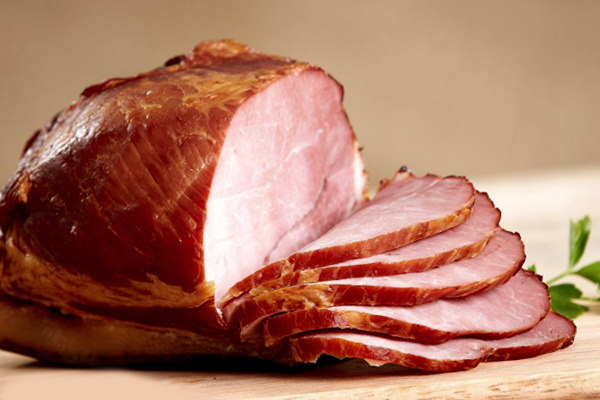
Ham is pork from the leg, preserved by curing with salt, often with nitrites added, and sometimes smoked. That process is what gives it the pink colour, the firm texture and the keeping quality. Wet cured ham is brined; dry cured hams like prosciutto and serrano are salted and air dried, and are saltier still.
Our pork page covers the uncured version, which is a genuinely good food for babies from six months.
Ham against fresh pork
Same animal, same cut. The salt row shows what curing does:
| Per 100 g | Cooked ham | Roast pork |
|---|---|---|
| Energy | 145 kcal | 212 kcal |
| Protein | 18 g | 27 g |
| Salt | 2.4 g | 0.1 g |
| Fat | 7 g | 11 g |
| Iron | 0.9 mg | 1 mg |
| Zinc | 1.8 mg | 2.4 mg |
Typical values. Dry cured hams such as prosciutto contain considerably more salt again. Source: USDA FoodData Central.
When can babies have ham?
Governed by the salt allowance, which is tiny in the first year:
With less than 1 g of salt allowed for the whole day, ham does not fit well. Roast pork, chicken or beef give the same protein without the curing.
The allowance rises to about 2 g a day, so a little chopped ham in a sandwich or an omelette is workable now and then. Count it against the rest of the day.
Fine as part of a varied diet. Processed meat is worth limiting for everyone, so keep it as an occasional convenience rather than a daily lunch. Plain roast turkey makes a better everyday sandwich filling.
Salt adds up fast at lunchtime: a ham sandwich brings salt from the ham, the bread and often the cheese too, and each of those is a significant contributor on its own. If ham is on the plate, keep the rest of the day low. Our salt guide has the limits by age.
Better sandwich fillings
All of these do the same job with a fraction of the salt:
Roast chicken or pork
Cooked at home and shredded. The same protein, none of the curing, and cheaper by weight.
Mashed avocado
Soft, creamy and easy to spread thinly, which is exactly what suits a baby.
Mashed egg
Well cooked egg mashed with a little yogurt makes a good filling with no added salt.
Hummus
Hummus spreads easily and brings iron and protein, though check the salt on shop bought.
Risks and safety
Salt is the practical concern for a baby, as covered above. Ham is also classed as processed meat, and health bodies including the World Health Organization advise limiting processed meat generally. That is a long term population level point rather than an acute risk to your baby, but it supports keeping ham occasional.
Two smaller notes. Thin floppy slices can ball up in a small mouth, so chop rather than serving whole. And uncooked cured hams such as prosciutto and parma ham are not cooked at all, only salted and dried, which carries a small listeria and parasite risk, so those are best avoided for babies and served cooked if used.
Ham FAQ
Can babies eat ham?
Occasionally, in small amounts, and better after 12 months. Ham is pork cured with salt, and that curing is the problem: two thin slices can carry more salt than a baby under one is meant to have in a whole day. Fresh roast pork gives you the same meat without the curing.
How much salt is in ham?
Typically around 2 to 3 g of salt per 100 g, though it varies by type. A single sandwich slice weighs about 15 g and carries roughly 0.4 g of salt. Given that babies under 12 months are limited to less than 1 g a day in total, two slices is most of the allowance gone.
Is ham a processed meat, and does that matter?
Yes, ham is classed as processed meat, which means preserved by curing, smoking or adding preservatives. Health bodies advise limiting processed meat for the whole population. For a baby the immediate issue is salt rather than anything long term, but it is a reason to keep it occasional.
Can babies eat ham as finger food?
It is not ideal. Ham slices are thin, floppy and can ball up in the mouth, and thicker pieces are chewy and firm. If you do offer it after 12 months, chop it into small pieces rather than giving a whole slice, and mix it into something else rather than serving it alone.
Sources
- Ham, Wikipedia.
- Carcinogenicity of processed meat, World Health Organization.
- FoodData Central, U.S. Department of Agriculture.
This article is general information, not medical advice. Every baby is different. Talk to your doctor, health visitor or paediatrician about your own baby, and about starting solids or any allergy concerns.