Can Babies Eat Hummus?
Yes. Smooth hummus is a great soft food from around 6 months, and honestly it is one of the easier things to hand a baby who wants to feed themselves. Two things to keep in mind. It contains sesame, a common allergen, so introduce it carefully. And a lot of shop hummus is salty, so go low-salt or make your own.
Hummus is a bit of a baby-feeding hero. It is soft, it is packed with plant protein and iron from the chickpeas, and it clings to a spoon or a strip of toast without much fuss. It also happens to be a neat way to introduce sesame, which is a food you want on your baby's radar early. Let's cover when to start, how to serve it and a quick low-salt version.
What is hummus?
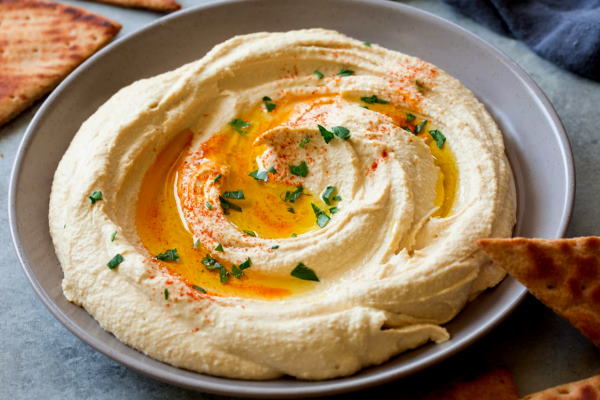
Hummus is a smooth dip made mainly from blended chickpeas and tahini, which is a paste of ground sesame seeds. Olive oil, lemon and garlic usually go in too. It comes from the Middle East and eastern Mediterranean and is eaten as a dip, a spread and a side.
Because it is soft and scoopable, hummus pairs well with finger foods. Spread it thin on toast fingers, or use it as a dip for soft cooked carrot sticks.
Hummus nutrition for babies
Hummus brings plant protein, fibre, iron and healthy fats to the table, which is a lot from one little bowl.
| Nutrient | Per 100 g (typical) |
|---|---|
| Energy | 166 kcal |
| Protein | 7.9 g |
| Fat | 9.6 g |
| Carbohydrate | 14.3 g |
| Fibre | 6.0 g |
| Iron | 2.4 mg |
Typical values for hummus. Shop versions vary, especially in salt. Source: USDA FoodData Central.
When can babies eat hummus?
Hummus can start from around 6 months. It grows with your baby nicely, from a smooth scoop to a proper dip:
Offer smooth hummus spread thinly on a soft toast finger, or stirred through a vegetable puree.
Let your baby dip soft cooked vegetable sticks or toast fingers. It will get everywhere. That is the job going well.
Serve it alongside soft pitta, vegetables and other little bits. Keep choosing low-salt versions.
Tip: if you buy hummus, scan the label for salt and pick the lowest you can find. Making your own is cheap and quick, and you can leave the salt out completely.
Health benefits of hummus for babies
Plant protein
Chickpeas give hummus a good hit of plant protein, handy for growing babies and for meat-free meals.
Iron
Chickpeas and tahini both add iron, which babies need plenty of from 6 months. Serve with a vitamin C food to help absorption.
Soft and grippy
Hummus sticks to toast and vegetable sticks, which makes it a friendly food for babies learning to feed themselves.
It is also an easy way to keep sesame in the diet once introduced. Serve it near other iron-rich foods, like a little lentil puree, and round the meal off with fruit such as banana.
How to serve hummus safely
Do
- Choose low-salt hummus, or make your own with no salt.
- Serve it smooth, as a thin spread or dip.
- Introduce it on its own the first time and watch for a reaction.
- Keep opened hummus covered in the fridge.
Avoid
- Salty shop hummus as a regular food.
- Thick sticky blobs, which are harder to manage.
- Adding extra salt or lots of garlic.
- Leaving your baby to eat unwatched.
Risks and safety
Hummus itself is soft and gentle, so the two things to think about are the sesame in the tahini and the salt. Sesame is one of the common allergens, so treat the first taste like any allergen: a small amount, at home, then keep an eye out. Salt is the other one, since babies' kidneys cannot handle much of it.
Sesame allergy: watch for hives, swelling, vomiting or any breathing trouble after a first taste, and get urgent help if they appear. For general guidance on introducing solids and allergens, see the American Academy of Pediatrics.
Easy hummus recipe (6 months)
Quick low-salt baby hummus
Makes 4 baby portions, from 6 monthsIngredients
- 200 g cooked or canned chickpeas, rinsed well
- 1 tbsp smooth tahini
- 1 tbsp olive oil
- A squeeze of lemon
- Water to loosen
Method
- Rinse the chickpeas well to wash off as much salt as you can.
- Blend the chickpeas, tahini, olive oil and lemon until smooth, adding water until it is soft and spreadable.
- Serve a little as a dip or spread, and keep the rest in the fridge for up to two days.
Hummus FAQ
When can babies eat hummus?
Babies can have smooth hummus from around 6 months. It makes a lovely soft dip or spread. It does contain sesame though, which is a common allergen, so introduce it and watch closely the first few times.
Is hummus a choking hazard?
Smooth hummus is soft and low risk. Serve it as a thin dip or spread rather than a thick sticky blob, and offer it with soft finger foods or stirred into vegetables.
Can babies have shop-bought hummus?
Some shop hummus is high in salt, which babies do not need, so check the label and pick a low-salt one or make your own. Homemade with no added salt gives you full control.
Does hummus contain allergens?
Yes. Hummus is made with tahini, which is sesame, one of the common allergens, and with chickpeas. Introduce it on its own the first time and watch for any reaction.
Sources
- Hummus, Wikipedia.
- FoodData Central, U.S. Department of Agriculture.
- Starting Solid Foods, American Academy of Pediatrics.
This article is general information, not medical advice. Every baby is different. Talk to your doctor, health visitor or paediatrician about your own baby, and about starting solids or any allergy concerns.