Can Babies Eat Mussels?
Yes, from around 12 months, thoroughly cooked and finely chopped. Mussels are nutritious, remarkably high in iron and B12, and low in mercury. What makes them different from fish is that they are filter feeders, so freshness and full cooking do a lot of work. Discard any that stay shut, and treat them as a new allergen even if prawns went fine.
Mussels are one of the most nutritious things in the seafood counter and one of the cheapest, which is an unusual combination. They contain more iron than red meat by weight, and iron is the nutrient babies most often run short of after six months. The safety rules around them are specific but not complicated, and they mostly come down to buying fresh and cooking properly.
What are mussels?
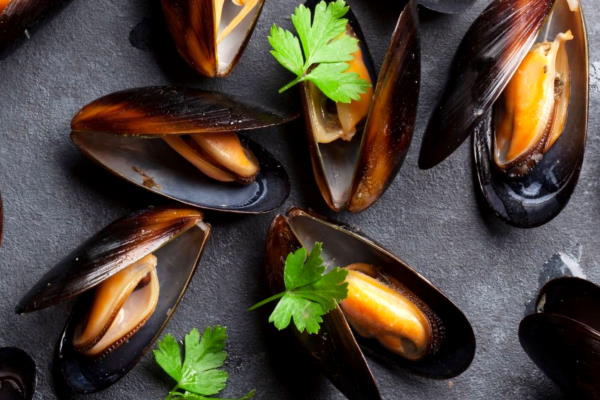
Mussels are bivalve molluscs, which puts them in a different allergen group from prawns and crab. They live attached to rocks and ropes and feed by filtering seawater. That filtering is why they grow well on farms without being fed, and also why what is in the water ends up in the mussel.
Because they are molluscs rather than crustaceans, a baby who happily eats prawns can still react to mussels. Introduce them as a fresh allergen. Oysters are in the same mollusc group.
Mussel nutrition
The iron and B12 figures are the reason mussels are worth the effort.
| Nutrient | Per 100 g |
|---|---|
| Energy | 172 kcal |
| Protein | 24 g |
| Iron | 6.7 mg |
| Vitamin B12 | 24 mcg |
| Selenium | 89 mcg |
| Omega 3 (EPA and DHA) | 0.8 g |
| Salt | 0.9 g |
Typical values for cooked mussels. Note the salt figure, which is naturally high. Source: USDA FoodData Central.
When can babies eat mussels?
Later than fish, mostly because of food safety rather than nutrition:
Shellfish can be introduced from 6 months in principle, but mussels are naturally salty and carry more food safety caveats than fish, so most guidance suggests waiting.
A small amount, chopped very finely and mixed into rice, pasta or tomato sauce. Introduce on its own the first time and watch for a reaction.
Mussel meat is chewy and elastic, which is difficult without molars. Keep chopping until chewing is properly established.
Buy fresh, cook fully, discard the shut ones: before cooking, throw away any mussel with a cracked shell, and any open one that does not close when you tap it. After cooking, throw away any that have not opened. Buy from a shop with quick turnover, keep them cold, and cook them the day you buy them. This is the whole safety routine and it takes a minute.
Finely chopped mussel and tomato rice
Tomato and rice mellow the strong flavour and make the texture manageable:
Finely chopped mussel and tomato rice
Makes 2 baby portions, from 12 monthsIngredients
- 6 fresh mussels in the shell
- 3 tablespoons cooked rice
- 2 tablespoons chopped tinned tomatoes with no added salt
- 1 teaspoon olive oil
Method
- Scrub the mussels and discard any that are cracked or that stay open when tapped.
- Steam them in a covered pan for 5 to 6 minutes, then discard any that have not opened.
- Pull the meat from the shells and chop it extremely finely, almost to a paste.
- Warm the tomatoes with the rice and olive oil, stir the mussel through, then cool before serving.
Risks and safety
Molluscan shellfish is a recognised major allergen, separate from both finned fish and crustaceans. Introduce mussels alone, earlier in the day, and watch for hives, rash, facial swelling, vomiting or an itchy mouth within two hours. Breathing difficulty, wheezing or a pale floppy baby is anaphylaxis and needs emergency services.
Food safety is the other half. Because mussels filter large volumes of seawater, they can concentrate norovirus, vibrio and marine biotoxins, and a baby has far less reserve than an adult for a serious stomach illness. Buy from a reputable source, keep them cold, cook until every shell has opened and the meat is firm, and never give a baby raw or lightly cooked shellfish. Also note the natural salt content and check our salt guide if mussels are joining an already salty meal.
Mussels FAQ
Can babies eat mussels?
Yes, from around 12 months, cooked thoroughly and chopped very finely. Mussels are a shellfish allergen, so introduce them on their own and watch closely. They must be fully cooked, since raw or undercooked shellfish carries a real risk of food poisoning that a baby has little margin for.
Do I really have to throw away mussels that stay closed?
It is the standard advice and it is sensible for a baby. A mussel that stays shut after cooking may simply have a strong muscle, but it may also have been dead before cooking and started to spoil. You cannot tell which from looking, so for a baby the safe move is to discard it.
Are mussels high in mercury?
No. Mussels are filter feeders low on the food chain, so they carry very little mercury. Their food safety concerns are different: they can concentrate bacteria, viruses and marine biotoxins from the water they filter, which is why thorough cooking and a reputable source matter.
Can a baby who eats prawns safely have mussels?
Not necessarily. Prawns and lobster are crustaceans, while mussels, clams and oysters are molluscs, and they are separate allergen groups. A baby can tolerate one group and react to the other, so introduce mussels as a new allergen even if crustaceans went fine.
Sources
- Mussel, Wikipedia.
- Feeding and Nutrition, American Academy of Pediatrics.
- FoodData Central, U.S. Department of Agriculture.
This article is general information, not medical advice. Every baby is different. Talk to your doctor, health visitor or paediatrician about your own baby, and about starting solids or any allergy concerns.