Can Babies Eat Prawns?
Yes, with care, from around 6 months. Prawns are one of the common allergens, and current thinking is to introduce allergens early rather than hold them back. Two rules matter more than the age: cook them right through, and chop them very finely. A whole prawn is rubbery and exactly the wrong shape for a small airway. The start age shown here is a more cautious 12 months.
Prawns are one of those foods where two separate cautions get muddled into one vague sense that they are risky. They are not risky in a general way. They carry a specific allergy risk, which you manage by introducing them deliberately and watching, and a specific choking risk, which you manage with a knife. Handle both and prawns are a good, quick source of protein.
What are prawns?
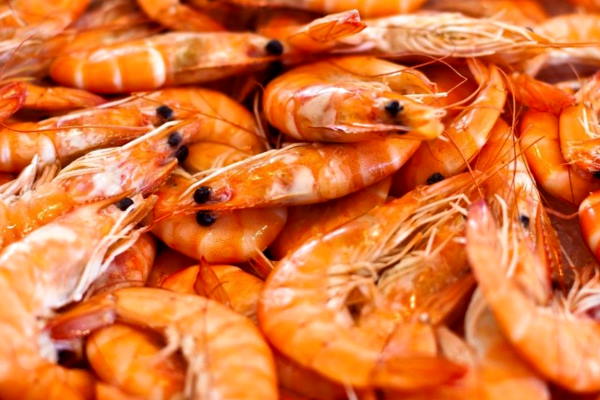
Prawns are crustaceans, in the same broad family as crab, lobster and crayfish. In everyday cooking the words prawn and shrimp mean the same thing, and which one people use depends mostly on where they live. They are sold raw and grey or cooked and pink, fresh or frozen, shell on or peeled.
Our shrimp page covers the same food under its other name, and lobster and mussels follow a similar pattern.
Prawn nutrition
Very lean, high in protein, and a strong source of B12, selenium and iodine.
| Nutrient | Per 100 g |
|---|---|
| Energy | 99 kcal |
| Protein | 24 g |
| Fat | 0.3 g |
| Vitamin B12 | 1.1 mcg |
| Selenium | 40 mcg |
| Iodine | 35 mcg |
| Salt | 0.3 g |
Typical values for cooked prawns. Pre-cooked and brined prawns can contain far more salt. Source: USDA FoodData Central.
When can babies eat prawns?
The texture, not the age, is what changes as they grow:
Introduce it as an allergen: on its own, earlier in the day, when your baby is well. Chop cooked prawn extremely finely and stir it through rice or vegetable mash.
Still chopped, never whole. Many families choose to wait until this point before offering shellfish at all, which is a perfectly reasonable approach.
Once molars are in and chewing is reliable. Until then a whole prawn is the wrong size and the wrong texture for a small airway.
Cook prawns fully, every time: raw and lightly cooked shellfish carries a risk of vibrio and norovirus, and a baby has no margin for a bad stomach bug. Cooked prawns turn from grey and translucent to pink and completely opaque, and curl into a loose C shape. A tight O shape means overcooked and rubbery.
Finely chopped prawn and rice mash
Rice and peas carry the prawn and keep the texture soft:
Finely chopped prawn and rice mash
Makes 2 baby portions, from 6 monthsIngredients
- 4 raw peeled prawns, deveined
- 3 tablespoons cooked rice
- 2 tablespoons peas
- 1 teaspoon olive oil
Method
- Poach the prawns in simmering water for 3 to 4 minutes, until pink and opaque right through.
- Cook the peas until soft and mash them roughly with the rice.
- Chop the cooked prawns extremely finely, almost to a paste for a younger baby.
- Stir everything together with the olive oil until soft and moist, then cool before serving.
Risks and safety
Shellfish is one of the allergens most often involved in severe reactions, and unlike milk or egg allergy it tends to persist for life. Introduce prawns on their own, when you can watch your baby for a couple of hours, and know the signs: hives, rash, swelling of the lips or face, vomiting, an itchy mouth. Any wheezing, breathing difficulty, throat swelling or a baby who goes pale and floppy is anaphylaxis and needs emergency services immediately.
Choking is the second risk and it is entirely about preparation. Prawns are springy and do not break down easily in a mouth without molars, so chop finely rather than dicing. Also check the salt on pre-cooked prawns, which are often packed in brine, and buy from a source with good turnover since shellfish spoils quickly. The American Academy of Pediatrics has current guidance on introducing allergens.
Prawns FAQ
Can babies eat prawns?
Yes, from around 6 months, as one of the common allergens worth introducing early rather than delaying. Cook them all the way through and chop them very finely, because prawns are rubbery and a real choking hazard. Plenty of families wait until 12 months, which is also fine.
Are prawns and shrimp the same thing?
In cooking, yes, and the words are used interchangeably in most of the world. Biologically they are different groups of crustaceans, but for feeding a baby there is no practical difference. Everything on this page applies equally to both.
How do I prepare prawns for a baby?
Buy them peeled and deveined, or peel them yourself and remove the tail and the dark vein. Cook until they turn pink and opaque all the way through, then chop very finely, almost to a paste for a younger baby. Never serve a whole prawn to a child under four.
What are the signs of a shellfish allergy?
Usually fast, within minutes to two hours: hives, a red blotchy rash, swelling of the lips or face, vomiting or an itchy mouth. Shellfish is one of the allergens most associated with severe reactions, so wheezing, breathing difficulty, a swollen throat or a floppy pale baby needs emergency help immediately.
Sources
- Prawn, Wikipedia.
- Feeding and Nutrition, American Academy of Pediatrics.
- FoodData Central, U.S. Department of Agriculture.
This article is general information, not medical advice. Every baby is different. Talk to your doctor, health visitor or paediatrician about your own baby, and about starting solids or any allergy concerns.