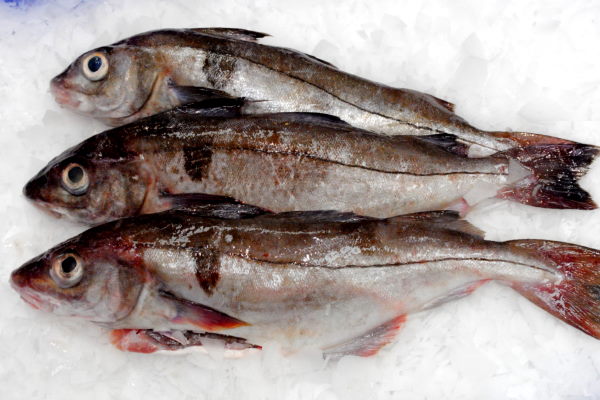
Can Babies Eat Haddock?
Yes, from 6 months, and it is an excellent first fish. Haddock is mild, low in mercury and flakes into soft pieces that mash easily, which is exactly what you want when a baby is meeting fish for the first time. The one thing to sidestep is smoked haddock, which is far too salty for the first year.
If you are nervous about giving your baby fish, haddock is where to start. It has none of the strong flavour that puts people off oily fish, the flakes are large enough to check by hand, and it is on every regulator's low mercury list, which is more than can be said for halibut. The main thing standing between you and an easy meal is the smoked version, which is a completely different proposition.
What is haddock?
Haddock is a saltwater white fish from the North Atlantic, closely related to cod. It has lean, firm flesh that turns bright white when cooked and separates into large, clean flakes. It is a staple of British fish and chips and of Scottish smoked fish, and it is fished from cold northern waters.
Haddock is lean, so pair it with an oily fish like salmon across the week to cover the omega 3 side. Our general fish guide has the full picture.
Haddock nutrition
Lean, high in protein and a good source of iodine and B12, with very little fat.
| Nutrient | Per 100 g |
|---|---|
| Energy | 90 kcal |
| Protein | 20 g |
| Fat | 0.6 g |
| Vitamin B12 | 1.6 mcg |
| Selenium | 29 mcg |
| Phosphorus | 200 mg |
| Salt | 0.2 g |
Typical values for raw haddock. Smoked haddock contains many times more salt. Source: USDA FoodData Central.
When can babies eat haddock?
Fresh haddock can come in early. Smoked is the one that waits:
Poach or bake it, flake it carefully and mash it into potato or vegetables. Offer it on its own the first time, since fish is a major allergen.
Large, moist flakes are easy for a baby to pick up once they are working on their pincer grip. Keep checking every flake for bones as you go.
Once the salt allowance rises to about 2 g a day, a small amount of smoked haddock in a family dish is workable. Soak it in milk first to draw out some salt. Smoked mackerel needs the same restraint.
Smoked haddock is a salt problem, not a smoke problem: curing uses a lot of salt, and a small portion can carry more than a baby's entire daily allowance. Dyed yellow smoked haddock also contains added colouring. Stick to fresh or frozen plain fillets in the first year, and see our salt guide for the limits.
Haddock and sweetcorn mash
Poaching in milk keeps the fish moist and gives you a ready made sauce for the mash:
Haddock and sweetcorn mash
Makes 2 baby portions, from 6 monthsIngredients
- 1 small skinless haddock fillet
- 1 small potato
- 2 tablespoons sweetcorn
- A splash of whole milk
Method
- Poach the haddock gently in milk or water for about 8 minutes, until it flakes easily.
- Boil the potato until soft and blend the sweetcorn smooth if your baby is on purees.
- Flake the haddock on a plate with your fingers, pressing each flake to check for bones.
- Mash everything together with a splash of milk until soft and moist, then cool before serving.
Risks and safety
Finned fish is one of the major allergens, so introduce haddock on its own, earlier in the day, and watch for hives, swelling, vomiting or an itchy rash within a couple of hours. A fish allergy is separate from a shellfish allergy, so tolerating shrimp or mussels tells you nothing about haddock, or the other way round.
Bones are the practical everyday risk. Flake with fingers rather than a fork, on a plate where you can see what you are doing, and check even fillets sold as boneless. Cook haddock through until it is opaque and never serve it raw or lightly cured to a baby. Mercury is not a concern here, since haddock is on the U.S. Food and Drug Administration best choices list.
Haddock FAQ
When can babies eat haddock?
From around 6 months. Haddock is a low mercury white fish with a mild flavour and a soft flake, which makes it one of the easiest fish to start with. Cook it through, flake it with your fingers to find bones, and mash it into something moist.
Can babies eat smoked haddock?
Better not before 12 months, and sparingly after that. Smoked haddock is cured with a lot of salt, and babies under one should have less than 1 g of salt a day in total. The bright yellow dyed version also adds colouring you do not need. Fresh haddock is the better choice.
How do I know when haddock is cooked?
The flesh turns from translucent to opaque white and separates into flakes when you press it. For a baby, cook it a little past that point rather than leaving it just done, since undercooked fish is not suitable for infants.
Is haddock high in mercury?
No. Haddock sits firmly in the low mercury group alongside cod, pollock and salmon, so it appears on the best choices list for young children. You can serve it as one of the regular fish in the week without worrying about building up mercury.
Sources
- Haddock, Wikipedia.
- Advice about Eating Fish, U.S. Food and Drug Administration.
- FoodData Central, U.S. Department of Agriculture.
This article is general information, not medical advice. Every baby is different. Talk to your doctor, health visitor or paediatrician about your own baby, and about starting solids or any allergy concerns.