Can Babies Eat Salmon?
Yes, and it is one of the better things you can put on the tray. From around 6 months, cooked through and carefully flaked, salmon gives your baby omega-3 fats that help the brain grow. Two rules: hunt for bones like it is your job, and remember fish is a common allergen, so introduce it on its own and watch.
Salmon punches above its weight. It is soft once cooked, mild enough for most babies, and loaded with the kind of fats little brains are busy building with. The catch, sorry, is bones. Get past those and it is a genuinely easy food to prepare.
What is salmon?
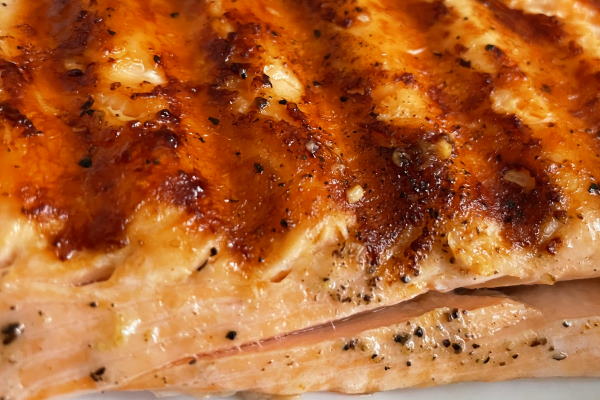
Salmon is an oily fish with soft pink-orange flesh. It lives in both the sea and rivers, and it is one of the most popular fish on dinner plates around the world. Being an oily fish is the whole point here, because that is where those helpful omega-3 fats live.
Salmon is rich but soft, so it plays well with a plain, starchy base. Mash it into potato, or serve it next to some sweet peas for colour and a bit of natural sweetness.
Salmon nutrition for babies
Salmon is a protein food with a real bonus: omega-3 fats, plus vitamin D and vitamin B12.
| Nutrient | Per 100 g (raw) |
|---|---|
| Energy | 208 kcal |
| Protein | 20 g |
| Fat | 13 g |
| Omega-3 (EPA and DHA) | 2.3 g |
| Vitamin D | 11 mcg |
| Vitamin B12 | 3.2 mcg |
Typical values for raw salmon. Source: USDA FoodData Central.
When can babies eat salmon?
Salmon can start from around 6 months. Cook it through every time, and adjust the shape as your baby grows:
Cook the salmon right through, then flake it and check every flake for bones. Mash it into potato or vegetables, or offer a boneless piece about the size of your finger for baby-led weaning.
Small, boneless flakes make good finger food. Soft, low-salt fishcakes work nicely at this stage too.
Salmon pasta, fishcakes and traybakes all work now, just keep the salt low.
Bones and allergy: fish is one of the common allergens, so serve salmon on its own the first time and watch for a reaction. And go through it carefully for bones every single time, because even a small one is a choking risk.
Health benefits of salmon for babies
Omega-3 for the brain
Salmon is rich in DHA, an omega-3 fat that supports fast brain and eye development in the first years.
Protein
It is a soft, complete protein, which babies need for steady growth.
Vitamin D
Oily fish is one of the few foods that naturally provides vitamin D for strong bones.
If your baby takes to salmon, it sits happily beside other soft foods. Try it with mashed avocado for a double hit of healthy fats, or work it into a meal once they are used to eggs and other common allergens.
How to serve salmon safely
Do
- Cook salmon all the way through.
- Check for bones every single time.
- Flake it soft or serve a boneless strip.
- Offer low-mercury oily fish once or twice a week.
Avoid
- Raw or lightly cooked salmon.
- Smoked salmon, which is very salty.
- Any bones, however small.
- Adding salt to the dish.
Risks and safety
Two things to keep in mind with salmon. Bones are a choking risk, so check carefully and use a boneless fillet where you can. And fish is a common allergen, so introduce it on its own and keep an eye out the first few times. On mercury you can relax, since salmon is a low-mercury fish.
Fish and weaning: for advice on oily fish, portions and which fish to limit, the NHS weaning guidance is a solid, practical read.
Easy salmon recipe (6 months)
Flaked salmon and potato mash
Makes 2 baby portions, from 6 monthsIngredients
- 1 small skinless salmon fillet
- 1 small potato
- A splash of whole milk or water
Method
- Steam or bake the salmon until it is cooked through and flakes easily.
- Boil the potato until soft, and flake the salmon, checking very carefully for bones.
- Mash the potato with the salmon and a splash of milk until smooth and moist, then cool before serving.
Salmon FAQ
When can babies eat salmon?
Salmon suits babies from around 6 months. Cook it right through, flake it, and check carefully for bones every time. Mash it into potato or vegetables, or offer a soft boneless piece for baby-led weaning.
Is salmon safe for babies given mercury?
Salmon is a low-mercury fish, so once or twice a week is fine for babies. It is the high-mercury fish, like shark, swordfish and marlin, that you avoid.
Is fish an allergen?
Yes, fish is one of the common food allergens. Introduce salmon on its own the first time and watch how your baby reacts before mixing it with other foods.
Can babies eat smoked or raw salmon?
No. Skip raw salmon, since raw fish is not safe for babies, and skip smoked salmon too, because it is very high in salt. Cooked, flaked, boneless salmon is the one you want.
Sources
- Salmon, Wikipedia.
- FoodData Central, U.S. Department of Agriculture.
- Weaning and feeding, National Health Service (UK).
This article is general information, not medical advice. Every baby is different. Talk to your doctor, health visitor or paediatrician about your own baby, and about starting solids or any allergy concerns.