Can Babies Eat Flax Seeds?
Ground, yes, from 6 months. Whole, no. Flax is a useful thing to have in the cupboard, particularly for plant based families, since it is one of the better plant sources of omega 3. But grinding is not a nicety. Whole seeds are a choking risk and pass through undigested, so an unground seed is both a hazard and a waste.
Flax is one of those foods where the preparation is the whole story. Sprinkled whole over a bowl it looks wholesome and achieves almost nothing, because the seed coat survives the entire journey through the gut. Ground into a fine meal it becomes genuinely useful, especially if your family does not eat fish.
What are flax seeds?
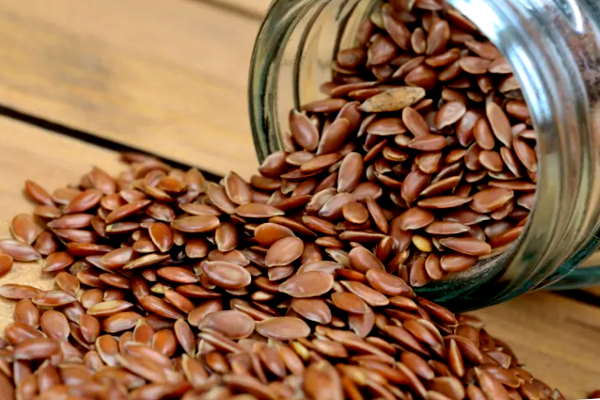
Flax, also called linseed, is a small glossy seed from the flax plant, brown or golden depending on variety. It is one of the richest plant sources of alpha linolenic acid, a short chain omega 3, and it is very high in soluble fibre. Nutritionally the two varieties are much the same.
Our chia seeds and hemp seeds pages cover the other seeds worth knowing about, each with its own preparation rule.
Flax seed nutrition
A teaspoon is a small amount, so treat the per 100 g column as context.
| Nutrient | Per 100 g | Per teaspoon (3 g) |
|---|---|---|
| Energy | 534 kcal | 16 kcal |
| Omega 3 (ALA) | 22.8 g | 0.7 g |
| Fibre | 27 g | 0.8 g |
| Protein | 18 g | 0.5 g |
| Magnesium | 392 mg | 12 mg |
| Iron | 5.7 mg | 0.17 mg |
Typical values for ground flax seed. Source: USDA FoodData Central.
About the omega 3
Worth being precise here, because flax is often described as an omega 3 source without qualification. Flax provides ALA, a short chain omega 3. The forms the brain actually uses are DHA and EPA, and the body converts ALA into those only inefficiently, at a rate usually estimated in single digit percentages.
That does not make flax pointless. It contributes, and it is a genuinely useful addition for a family that does not eat fish. But for a vegan baby, current advice is an algae based DHA supplement rather than relying on flax alone. For families who eat fish, salmon and sardines supply DHA directly.
Serving flax by age
Ground throughout. What changes is the amount:
Stirred into porridge, yogurt or a fruit puree. Start small, since flax is high in fibre and a sudden increase upsets a small stomach.
Also works stirred into pancake batter, muffins or a bean patty mixture, where it helps bind things together.
Once chewing is reliable, whole seeds are no longer a choking risk, though they still pass through undigested, so ground remains the more useful form.
Flax absorbs liquid and thickens: ground flax swells as it sits, so a puree that was the right consistency can stiffen noticeably within a few minutes. Loosen it with extra milk or water just before serving, and make sure your baby is drinking well generally if flax is a daily addition, since the fibre needs fluid to work properly.
Flax and banana breakfast oats
The easiest way to use it daily, and the oats hide it completely:
Flax and banana breakfast oats
Makes 2 baby portions, from 6 monthsIngredients
- 3 tablespoons rolled oats
- 150 ml whole milk or formula
- 1 teaspoon ground flax seed
- Half a ripe banana
- A pinch of cinnamon
Method
- Simmer the oats with the milk for about 5 minutes until soft and thick.
- Stir the ground flax through the warm oats and leave for a minute to absorb.
- Mash the banana thoroughly and fold it in with the cinnamon.
- Loosen with extra milk if it has thickened too much, and cool before serving.
Risks and safety
Whole seeds are the clear physical risk: small, hard and smooth is the profile that causes trouble in a young airway, and the nutritional case for grinding is just as strong. Flax allergy is uncommon but does occur, so introduce it on its own the first time.
Three practical notes. Ground flax goes rancid quickly, so keep it cold and buy small quantities or grind your own. Go steadily with the amount, since the fibre content is high relative to the portion. And flaxseed oil is a different product from the ground seed, containing the oil without the fibre; it is not necessary for a baby and should not be heated. Whole flax also contains small amounts of naturally occurring compounds that break down with cooking, which is another reason large quantities of raw seed are not advised.
Flax seeds FAQ
Can babies eat flax seeds?
Ground flax seeds, yes, from around 6 months. Whole seeds are the problem: they are small, hard and slippery, which makes them a choking risk, and they pass straight through undigested so your baby gets nothing from them anyway. Grinding solves both issues at once.
Why do whole flax seeds pass through undigested?
The seed coat is tough and the human gut cannot break it down. A whole flax seed goes in one end and comes out the other largely intact, taking its omega 3 and fibre with it. Grinding ruptures the coat and releases the contents, which is why every recipe specifies ground or milled flax.
How much ground flax can a baby have?
Start with about half a teaspoon a day and build up to a teaspoon. Flax is high in fibre, so a sudden large amount can cause wind, loose stools or discomfort. It also absorbs liquid, so make sure your baby is drinking well if flax becomes a regular part of their food.
How should ground flax be stored?
In the fridge or freezer, in an airtight container. The oils in flax are polyunsaturated and go rancid quickly once the seed is ground, particularly at room temperature. Whole seeds keep much longer, so grinding small batches as you need them is the practical approach.
Sources
- Flax, Wikipedia.
- Vegetarian, vegan and plant-based diet, British Dietetic Association.
- FoodData Central, U.S. Department of Agriculture.
This article is general information, not medical advice. Every baby is different. Talk to your doctor, health visitor or paediatrician about your own baby, and about starting solids or any allergy concerns.