Can Babies Eat Lettuce?
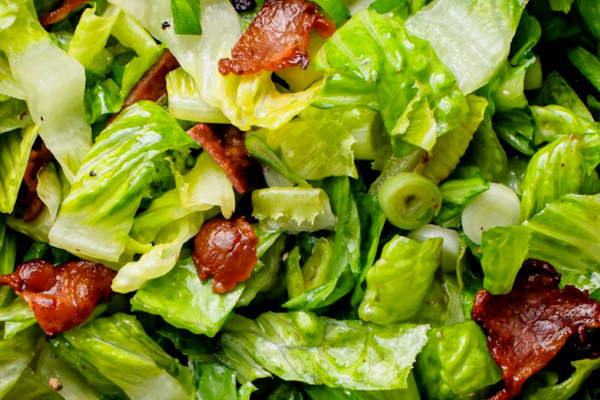
Finely shredded or cooked, from around 9 months. Lettuce is harmless and not especially nutritious, and the reason it waits a little is texture. Thin floppy leaves need a chewing action a baby has not developed yet, so a whole leaf tends to bunch up rather than break down. Shred it small or wilt it into something.
Lettuce is one of the few vegetables where the honest answer is that it does not matter very much. It is mostly water, it is not a significant source of anything unless you choose the darker varieties, and the main reason to wait a few months is that a baby physically struggles with a leaf. None of that makes it a problem, it just makes it low priority.
Not all lettuce is the same
Iceberg is the crisp pale one, around 96 percent water and nutritionally close to nothing. Romaine, little gem, cos and lamb's lettuce have darker leaves and carry meaningfully more folate, vitamin K and beta carotene. If lettuce is going to appear in a baby's meal, the darker options are worth choosing.
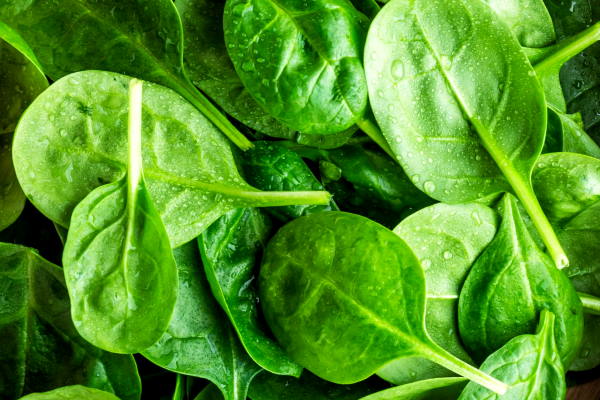
Our spinach and kale pages cover leafy greens that bring considerably more to a baby's plate.
Iceberg against romaine
The gap between varieties is larger than between lettuce and many other vegetables:
| Per 100 g | Iceberg | Romaine |
|---|---|---|
| Energy | 14 kcal | 17 kcal |
| Water | 96 g | 95 g |
| Vitamin A | 25 mcg | 436 mcg |
| Vitamin K | 24 mcg | 103 mcg |
| Folate | 29 mcg | 136 mcg |
| Fibre | 1.2 g | 2.1 g |
Typical values for raw lettuce. Source: USDA FoodData Central.
Serving lettuce by age
Cooked first, raw later, and always shredded small at the start:
Wilted into a soup or pureed with peas, which is a traditional French combination and works well. In this form it goes in as early as any vegetable.
Shredded into ribbons a centimetre or less and mixed through other food rather than served as leaves. Avoid whole leaves at this stage.
As chewing improves, torn pieces become manageable. Many toddlers still find leaves difficult well past two, which is normal rather than a problem.
Wash it even if the bag says pre-washed: leafy salad has been involved in a number of E. coli and listeria outbreaks, and bagged leaves sit in a sealed humid environment that suits bacteria. Rinse leaves individually under running water, use them well before the date on the bag, and keep them refrigerated. This matters more for a baby than for an adult.
Wilted lettuce and pea puree
Cooking lettuce sounds odd and works beautifully, especially with peas:
Wilted lettuce and pea puree
Makes 3 baby portions, from 6 monthsIngredients
- 2 handfuls of romaine or little gem lettuce, washed
- 150 g frozen peas
- Half a small onion, finely chopped
- 1 teaspoon olive oil
- 200 ml water or no salt stock
Method
- Soften the onion in the olive oil over low heat for 8 minutes.
- Add the peas and liquid and simmer for 6 minutes until tender.
- Stir in the shredded lettuce and cook for a further 2 minutes, just until wilted.
- Blend smooth, loosen with a little water if needed, and cool before serving.
Risks and safety
Lettuce allergy is rare. The two things worth attention are texture and washing, both covered above. Neither is dramatic, and neither is a reason to avoid lettuce, but the washing point is more substantive than most people assume given how often bagged salad is eaten straight from the pack. Jicama raises the same washing question when it is served raw.
One further note on the texture question: because leaves are difficult rather than dangerous, a baby refusing lettuce is not a failure. Leafy greens are among the last textures children master, and there is no nutritional urgency, since spinach, kale, broccoli and peas all deliver more and are easier to eat. Offer it, do not push it, and let their chewing catch up.
Lettuce FAQ
Can babies eat lettuce?
From around 9 months, finely shredded or cooked into a dish. A whole raw leaf is difficult for a baby to break down: it is thin and slippery, it does not dissolve, and it can bunch up in the mouth. Shredding it very finely, or wilting it into a soup, solves that.
Why is a lettuce leaf tricky for a baby?
Because of the texture rather than the size. Leafy greens are thin and floppy and need a chewing action babies have not yet developed, so a leaf can fold into a wad rather than being broken up. It is not a classic choking hazard like a grape, but it is genuinely hard to manage.
Do I need to wash lettuce for a baby?
Yes, thoroughly, including bagged salad labelled as pre-washed. Leafy greens have been linked to outbreaks of E. coli and listeria, and a baby has less reserve for a serious stomach illness. Rinse leaves individually under running water, and use them well within their date.
Is lettuce actually nutritious?
It depends which one. Iceberg is mostly water with very little to offer. Darker leaves like romaine, little gem and lamb's lettuce carry considerably more folate, vitamin K and beta carotene. If you are offering lettuce for nutrition rather than texture practice, choose the darker varieties.
Sources
- Lettuce, Wikipedia.
- What You Need to Know about Foodborne Illnesses, U.S. Food and Drug Administration.
- FoodData Central, U.S. Department of Agriculture.
This article is general information, not medical advice. Every baby is different. Talk to your doctor, health visitor or paediatrician about your own baby, and about starting solids or any allergy concerns.