Can Babies Eat Tuna?
Yes, but with a limit. Tuna is fine from around 6 months in small, occasional amounts. The catch is mercury, so this is a now-and-then food, not a daily one. Go for canned light tuna, flake it, check for bones, and pair it with other fish like salmon across the week.
Tuna is handy, cheap and full of protein, and babies can absolutely have it. It just comes with an asterisk. Tuna sits higher up the food chain than most fish, so it carries more mercury, which means small and occasional is the rule. Get that right and it is a useful, easy addition to the menu.
What is tuna?
Tuna is a large saltwater fish, sold fresh as steaks or, more commonly for everyday cooking, canned. Canned light or skipjack tuna comes from smaller species and is lower in mercury than albacore or fresh tuna. That difference matters when you are feeding a baby.
Because tuna is a limited food, it is worth rotating fish. Serve salmon as your regular oily fish, and use tuna now and then, mashed with soft potato or stirred through rice.
Tuna nutrition for babies
Tuna is very high in protein and low in fat, with selenium, vitamin D and vitamin B12.
| Nutrient | Per 100 g (canned in water) |
|---|---|
| Energy | 116 kcal |
| Protein | 26 g |
| Fat | 0.8 g |
| Vitamin D | 1.7 mcg |
| Vitamin B12 | 2.5 mcg |
| Selenium | 68 mcg |
Typical values for canned light tuna in water. Source: USDA FoodData Central.
When can babies eat tuna?
Tuna can start from around 6 months as an occasional food. Keep portions small and change the texture as your baby grows:
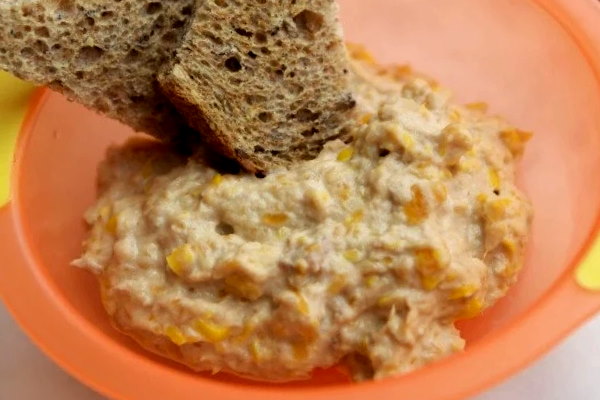
Flake canned tuna finely, check for bones, and mash it into soft potato or vegetables for a smooth meal.
Serve soft tuna flakes mixed into pasta or rice, or small, soft tuna and potato patties as finger food.
Mercury: tuna carries more mercury than most fish, so keep it small and occasional rather than a regular meal. Canned light or skipjack tuna is a lower-mercury choice than fresh or albacore tuna.
Health benefits of tuna for babies
Protein
Tuna is packed with lean protein, giving babies plenty of the building blocks for growth in a small portion.
Vitamin D and B12
It provides vitamin D for bones and vitamin B12 for healthy nerves and blood.
Easy and soft
Canned tuna flakes easily into a soft, smooth texture, which makes it a quick meal on a busy day.
Since canned tuna loses much of its omega-3, keep an oily fish in the rotation too. A regular serving of salmon covers the omega-3 that tuna misses.
How to serve tuna safely
Do
- Choose canned light tuna in water.
- Flake it and check carefully for bones.
- Keep portions small and occasional.
- Introduce it on its own the first time.
Avoid
- Tuna as a daily food, because of mercury.
- Salty tuna or lots of mayonnaise.
- Undercooked fresh tuna.
- Serving it without checking for bones.
Risks and safety
Two things to keep in mind with tuna: mercury and allergy. Keep tuna small and occasional to stay well within safe mercury limits, and remember that fish is a common allergen, so introduce it on its own and watch the first time.
Fish and weaning: the NHS has guidance on introducing fish and on limiting higher-mercury fish like tuna for babies and young children.
Easy tuna recipe (6 months)
Tuna and potato mash for baby
Makes 2 baby portions, from 6 monthsIngredients
- 1 small potato, diced
- 2 tbsp canned light tuna in water, drained
- 1 tbsp milk or unsalted stock
Method
- Boil or steam the potato until soft.
- Flake the drained tuna, checking carefully for any bones.
- Mash the potato and tuna together with a little milk or stock until smooth, then cool before serving.
Tuna FAQ
When can babies eat tuna?
Babies can have tuna from around 6 months, but only in small, occasional amounts because of its mercury content. Choose canned light tuna, flake it and check for any bones, and do not serve it every day.
Is tuna safe for babies with mercury?
Tuna contains mercury, which is why it is limited rather than banned. Canned light or skipjack tuna is lower in mercury than fresh or albacore tuna. Keeping portions small and occasional keeps it safe.
Is canned tuna ok for babies?
Yes, and it is often the easiest option. Choose tuna canned in water with no added salt, drain it well and flake it. Note that canned tuna does not count as an oily fish, so it is worth serving salmon too.
Is tuna an allergen?
Fish is one of the common food allergens, so introduce tuna on its own the first time and watch for any reaction. Once your baby has had it with no problem, you can include it as an occasional food.
Sources
- Tuna, Wikipedia.
- FoodData Central, U.S. Department of Agriculture.
- Weaning and feeding, National Health Service (UK).
This article is general information, not medical advice. Every baby is different. Talk to your doctor, health visitor or paediatrician about your own baby, and about starting solids or any allergy concerns.