Can Babies Eat Popcorn?
No. Not before about 4 years. Popcorn sits near the top of every choking hazard list, alongside whole grapes and hard sweets. It is not about the popcorn being unhealthy, it is the physical shape: light, irregular, impossible to dissolve, and hiding rock hard kernels that no toddler can chew.
Popcorn looks like the friendliest food in the world. It is light, it dissolves in an adult mouth almost instantly, and it seems far less threatening than a whole grape. That impression is exactly the problem. In a mouth without molars, popcorn behaves nothing like it does in yours, and it is one of the foods most often involved in choking incidents in young children.
What is popcorn?
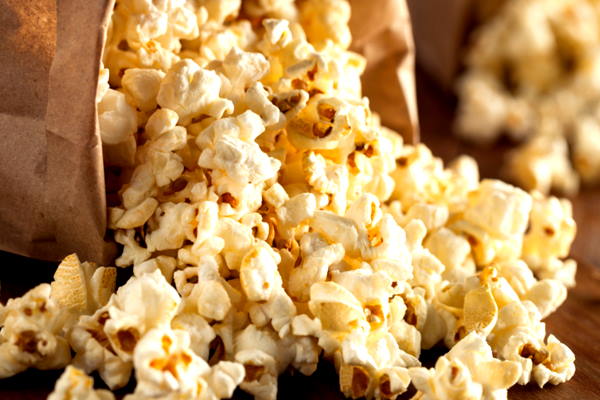
Popcorn is a type of corn whose kernels have a hard hull and a starchy centre holding a little water. Heat turns that water to steam until the hull bursts and the starch puffs out. The bit that matters here is that not every kernel pops, and the hull does not disappear, it just becomes a thin, papery flake.
Corn itself is not off limits, to be clear. Soft corn kernels cooked until tender, or corn blended into a puree, are fine from around six months. It is specifically the popped, dry form that causes trouble.
Why popcorn is worse than it looks
Four separate properties, each of which would be a problem on its own:
It does not dissolve
Saliva breaks down a rusk or a puff snack within seconds. Popcorn stays intact, so a piece in the airway does not soften and clear itself.
Awkward shape
The irregular, branching shape catches and wedges rather than sliding down, and a young child's airway is roughly the width of a drinking straw.
Sticky hulls
The thin hull separates and clings to the roof of the mouth or the back of the throat, which triggers coughing and gagging.
Hidden hard kernels
Every bowl contains unpopped and half popped kernels. These are as hard as gravel and cannot be chewed without molars.
Inhaled popcorn can cause trouble days later: a fragment that goes into the lungs rather than the stomach may not cause an obvious choking episode at all. If your child develops a persistent cough, wheeze, noisy breathing or a fever in the days after eating popcorn, mention it to a doctor and say that popcorn was involved.
When can children eat popcorn?
This is one of the longer waits on the site, and it is worth holding the line:
Not in any form, including a single piece offered to keep them quiet in the cinema. Soft cooked corn is the safe way to give them the same flavour.
Toddlers are the highest risk group for choking, because they move, talk and laugh while eating and their molars are not fully in. Popcorn plus a moving toddler is the bad combination.
By four most children chew and swallow reliably. Serve it sitting down, never in the car or while running about, and pick out unpopped kernels first. Veggie straws raise the same question a little earlier.
What to serve instead
If you want a snack with the same casual, grab a handful feeling, these work from six months and up:
Safer snack swaps
Risks and safety
Choking is the whole story with popcorn. There is no allergy concern worth mentioning, and plain air popped corn is not unhealthy, unlike fried snacks such as donuts. The American Academy of Pediatrics lists popcorn among the foods to avoid entirely in children under four.
Two practical habits matter more than any list. Always have children sitting down and still while they eat, since most incidents involve movement. And learn infant and child first aid for choking before you need it, because the response differs by age and it is not something you want to be reading about in the moment. Ask your health visitor or local health service where to do a short course.
Watch older siblings: most popcorn a baby gets hold of comes from a big brother or sister sharing kindly, or from a bowl left on a low table. If popcorn is in the house, it needs to stay above waist height and out of reach.
Popcorn FAQ
Can babies eat popcorn?
No. Popcorn is not safe before about 4 years old. It is a well known choking hazard: the pieces are light and irregular, the hulls stick to the roof of the mouth and throat, and hard unpopped kernels hide in every bowl.
Why is popcorn a choking hazard?
Several reasons at once. Popcorn does not dissolve in saliva, so it stays intact if it goes down wrong. Its irregular shape can wedge in a small airway. The thin hulls cling to the throat. And unpopped or half popped kernels are rock hard, which young children cannot grind down without a full set of molars.
What if my baby has already eaten popcorn?
If they swallowed it without trouble and are breathing, eating and behaving normally, they are very likely fine. Watch for coughing that will not settle, wheezing, noisy breathing or a hoarse cry over the following days, since an inhaled piece can lodge in the airway and cause problems later. Get medical advice if you see any of those.
When can children eat popcorn safely?
Around 4 years is the usual guidance, and some sources say 5. What matters is that they have their back molars, can chew properly, and are able to sit still while eating. Even then, serve it seated and supervised, and pick out any unpopped kernels first.
Sources
- Popcorn, Wikipedia.
- Choking Prevention, American Academy of Pediatrics.
- Foods and Drinks for 6 to 24 Month Olds, Centers for Disease Control and Prevention.
This article is general information, not medical advice. Every baby is different. Talk to your doctor, health visitor or paediatrician about your own baby, and about starting solids or any allergy concerns.