Can Babies Eat Xylitol?
Best avoided before 2 years. Xylitol is not poisonous to people, and the famous warnings you have read are about dogs, for whom it genuinely is dangerous. For a baby the problem is more ordinary: it is poorly absorbed, so it ferments in the gut and causes wind and diarrhoea. And a baby has no need for a sweetener in the first place.
Xylitol turns up in a lot of homes now, in sugar free gum, mints, toothpaste and "no added sugar" baking. Most parents find this page after reading a frightening headline about xylitol and dogs and wondering whether the same applies to their baby. The short version: it does not, but that does not make it a good idea either.
What is xylitol?
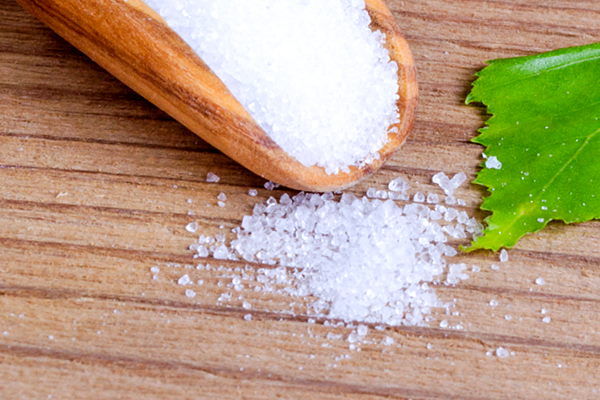
Xylitol is a sugar alcohol, which despite the name contains no alcohol in the drinking sense. It occurs naturally in small amounts in fruit and vegetables and is produced commercially from birch wood or corn cobs. It looks and tastes remarkably like sugar, with about 40 percent fewer calories, and it does not raise blood sugar much.
If you are reaching for a sweetener because porridge tastes bland, mashed banana or a spoon of apple puree solves the same problem and actually feeds your baby something.
Why it upsets small stomachs
Xylitol is absorbed slowly and incompletely in the small intestine. What is not absorbed carries on into the large intestine, pulls water in with it, and gets fermented by gut bacteria. In an adult that means wind and a loose stool after too much sugar free gum. In a body a fraction of the size, it takes correspondingly less to cause the same thing.
Wind and bloating
Fermentation in the large intestine produces gas, which is uncomfortable and hard for a baby to shift.
Loose stools
Xylitol draws water into the bowel. Persistent diarrhoea in a baby risks dehydration, which is the part worth taking seriously.
A sweet tooth for nothing
It trains a preference for very sweet food while delivering no nutrients at all. Fruit does the job and brings fibre with it.
If you have a dog, this matters: xylitol causes a sudden and dangerous drop in blood sugar in dogs, and can lead to liver failure. A dropped piece of sugar free gum is enough. Keep xylitol products high up and well away from both the baby and the dog, and call a vet immediately if your dog eats any.
When can children have xylitol?
There is no medical milestone here, just a sensible progression:
No sweeteners of any kind. Milk, fruit and vegetables cover everything a baby needs, and their gut is easily upset.
Added sugars and sweeteners are both best skipped under two. If a xylitol sweetened food ends up in front of them once, watch for a loose nappy rather than worrying.
Xylitol toothpaste and the occasional sugar free product are fine. Large amounts still cause digestive upset at any age, so quantity is the thing to watch. Erythritol behaves the same way, just at a higher dose.
Where you will find it
Worth knowing which cupboards to check, since xylitol is often not obvious from the front of the pack:
Commonly contains xylitol
- Sugar free chewing gum and mints, usually the highest concentration
- Children's and adult toothpaste and mouthwash
- Sugar free sweets and chocolate
- Some peanut butters marketed as low sugar
- Diabetic and keto baking products
- Some chewable vitamins and medicines
Risks and safety
To be proportionate about it: if your toddler swallowed a piece of xylitol gum, the likely outcome is a bad nappy, not an emergency. Watch for diarrhoea and keep fluids up. A large quantity, such as getting into a bag of sweets or a bag of the raw sweetener, is worth a call to your doctor or poison control, mainly because of dehydration risk.
Xylitol is approved as a food additive by regulators including the U.S. Food and Drug Administration, and the safety questions for babies are about digestion and habit rather than toxicity. The one genuine emergency scenario in a household with xylitol involves the dog, not the baby.
Xylitol FAQ
Can babies have xylitol?
It is best avoided before 2 years. Xylitol is not toxic to humans, but it is poorly absorbed in the gut, so even small amounts cause bloating, wind and diarrhoea in a small child. There is also no nutritional reason to give a baby a sweetener of any kind.
Is xylitol dangerous for babies?
Not in the way it is for dogs. In humans, xylitol does not cause the dangerous drop in blood sugar that it causes in dogs. The realistic risk for a baby is digestive upset, which can be significant if they get hold of a packet of xylitol sweetened sweets or gum.
Why is xylitol in so many products?
It tastes almost exactly like sugar, has about 40 percent fewer calories, and unlike sugar it does not feed the bacteria that cause tooth decay. That combination makes it popular in sugar free gum, mints, toothpaste and diabetic foods.
What should I use to sweeten baby food instead?
Fruit. Mashed banana, apple puree, blended dates or grated pear all sweeten porridge and baking naturally, and they bring fibre and vitamins with them. Cinnamon and vanilla also make food taste sweeter without any sweetener at all.
Sources
- Xylitol, Wikipedia.
- High-Intensity Sweeteners, U.S. Food and Drug Administration.
- Foods and Drinks for 6 to 24 Month Olds, Centers for Disease Control and Prevention.
This article is general information, not medical advice. Every baby is different. Talk to your doctor, health visitor or paediatrician about your own baby, and about starting solids or any allergy concerns.