Can Babies Eat Kiwi?
Yes, with a little care. Kiwi is soft, sweet and one of the best fruits going for vitamin C. It is also acidic and a known allergen, so some families hold off a bit. Plenty start from 6 months. This guide lists a cautious 10 months. Peel it, keep it soft, and watch the first time.
Kiwi is a nutritional overachiever. Tiny, but stuffed with more vitamin C than an orange. Babies usually love the soft, sweet flesh, and you get a green mush that stains everything it touches. The reason it comes with a note of caution is simple, and we will get into it below.
What is a kiwi?
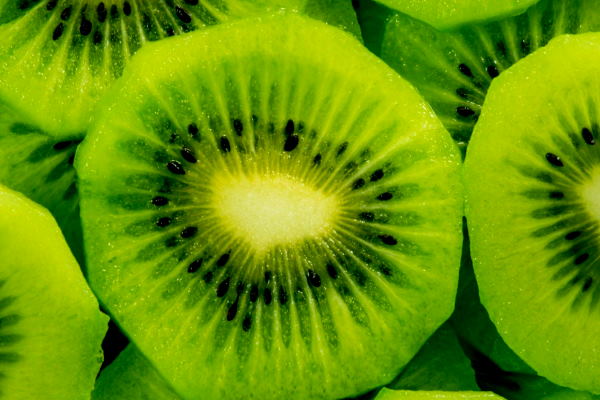
A kiwi, or kiwifruit, is a small fruit with fuzzy brown skin and bright green or golden flesh dotted with tiny black seeds. It has a sweet and tangy taste. The fruit grows on a climbing vine and started out being called the Chinese gooseberry.
Kiwi is tangy, so a creamy or sweet partner rounds it off nicely. Mash it with banana, or serve it next to other vitamin C fruits like strawberries once your baby has met each one on its own.
Kiwi nutrition for babies
For such a little fruit, kiwi punches hard. It is famously high in vitamin C, with fibre, vitamin K and potassium too.
| Nutrient | Per 100 g (fresh) |
|---|---|
| Energy | 61 kcal |
| Carbohydrate | 15 g |
| of which sugars | 9 g |
| Fibre | 3 g |
| Vitamin C | 92 mg |
| Vitamin K | 40 mcg |
| Potassium | 312 mg |
Typical values for fresh kiwi. Source: USDA FoodData Central.
When can babies eat kiwi?
Guidance varies. Many babies meet kiwi from around 6 months, while some families wait because it is acidic and a known allergen. This guide lists 10 months as a cautious start. Whenever you begin, peel it and keep it soft:
Peel a ripe kiwi and mash it, or cut soft slices your baby can grip. Watch closely the first few times.
Cut peeled kiwi into small, bite-sized pieces as your toddler gets more confident with chewing.
Halved kiwi slices work well now. Keep an eye on portion size, since it is easy to eat a lot of this one.
Tip: if your baby has had eczema or another food allergy, have a word with your doctor before that first taste of kiwi. Better to ask than to guess.
Health benefits of kiwi for babies
Loads of vitamin C
Kiwi is one of the richest fruit sources of vitamin C, which supports immunity and iron absorption.
Helps things move
The fibre and natural compounds in kiwi give digestion a gentle push, useful for a stuck baby.
Vitamin K
Kiwi provides vitamin K, which the body needs for healthy blood clotting and strong bones.
Kiwi brightens up a bowl of almost anything. Stir a little into warm oatmeal, or fold it through plain yogurt for a fresh, tangy breakfast. Dragon fruit is often compared to kiwi and is a good deal milder.
How to serve kiwi safely
Do
- Peel it and use only the soft flesh.
- Choose ripe fruit that gives to a gentle squeeze.
- Offer it on its own the first time.
- Wipe your baby's face after eating.
Avoid
- The fuzzy skin for babies.
- Firm, under-ripe kiwi, which is very sharp.
- Large slippery slices for young babies.
- Rushing it if your baby has other allergies.
Risks and safety
Two things to keep in mind with kiwi. It is a recognised allergen, so a first taste deserves a careful watch, and it is acidic, so a red rash around the mouth is common and usually harmless. Introduce it on its own, and keep an eye out for anything beyond a simple rash. Figs deserve the same first-taste care, as they can irritate the mouth in much the same way.
Watch the first taste: a mild mouth rash is one thing, but hives, facial swelling, vomiting or breathing trouble need urgent care. For general advice on starting solids and new foods, see the American Academy of Pediatrics.
Easy kiwi recipe (10 months)
Kiwi and banana baby mash
Makes 2 baby portions, from 10 monthsIngredients
- 1 ripe kiwi
- 1/2 ripe banana
Method
- Peel the kiwi and cut out the pale firm bit in the very centre if it is tough.
- Add the peeled banana and mash the two together until soft and smooth.
- Serve straight away, and wipe your baby's face afterwards in case of a mild acid rash.
Kiwi FAQ
When can babies eat kiwi?
Many families offer kiwi from around 6 months, but it is a recognised allergen and quite acidic, so plenty wait a little. This guide takes the cautious line at 10 months. Peel it, use ripe soft fruit, and mash or slice it small.
Is kiwi a common allergen?
Kiwi is one of the fruits more often linked with allergy, and it can also leave a harmless acid rash around the mouth. Offer it on its own the first time, watch for any wider reaction, and check with your doctor first if your baby already has food allergies.
Does kiwi need to be peeled?
Yes, peel it for babies. The fuzzy skin is technically edible, but it is fibrous and not much fun for a baby, so serve just the soft green or gold flesh.
Is kiwi good for babies?
Very. Kiwi has more vitamin C than an orange gram for gram, plus fibre and vitamin K. It also has a gentle laxative effect, which comes in handy for a constipated baby.
Sources
- Kiwifruit, Wikipedia.
- FoodData Central, U.S. Department of Agriculture.
- Starting Solid Foods, American Academy of Pediatrics.
This article is general information, not medical advice. Every baby is different. Talk to your doctor, health visitor or paediatrician about your own baby, and about starting solids or any allergy concerns.