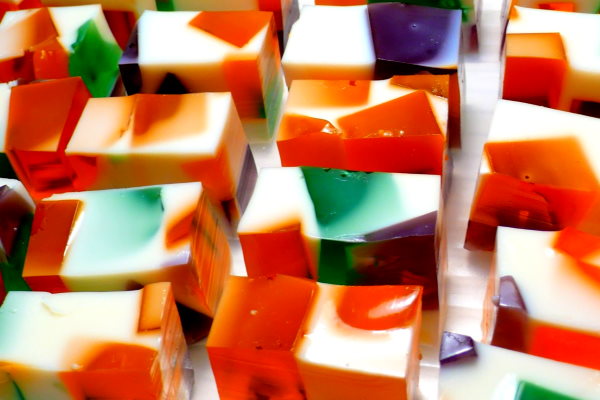
Can Babies Eat Jelly?
Which jelly do you mean? In Britain, jelly is the wobbly gelatin dessert, and that is best left until after 12 months, chopped small because whole cubes are a choking risk. In America, jelly is a clear fruit spread, which is jam by another name and belongs after 24 months. Both are mostly sugar, and neither has much to offer a baby.
This is one of the few foods where the answer genuinely depends on which side of the Atlantic you are standing. A British parent asking about jelly means the thing that wobbles on a plate at a birthday party. An American parent means the thing that goes on toast with peanut butter. They are different foods with different risks, so this page covers both.
Two foods, one word
British jelly, and American Jell-O, is a dessert made from gelatin, sugar, flavouring and colouring, set into a wobbling solid. American jelly is a fruit preserve made from strained fruit juice cooked with sugar and pectin, so it is clear rather than containing fruit pieces. Jam, made from crushed whole fruit, means the same thing everywhere.
If you meant the spread, our jam page covers it fully, including a no added sugar recipe.
What is in a jelly dessert
Essentially sugar, water and colour, with a little protein from the gelatin.
| Nutrient | Per 100 g prepared |
|---|---|
| Energy | 62 kcal |
| Carbohydrate | 14 g |
| of which sugars | 14 g |
| Protein | 1.2 g |
| Fat | 0 g |
| Fibre | 0 g |
| Vitamins and minerals | Negligible |
Typical values for prepared gelatin dessert. Sugar free versions use sweeteners instead. Source: USDA FoodData Central.
When can babies have jelly?
Later than most desserts, mainly because of the texture:
No nutritional reason to offer it, and the texture is unhelpful for a baby still learning to move food around their mouth.
Never in whole cubes. Chop it finely or mash it with a fork, and keep your child seated and watched while they eat it.
Fine as an occasional treat by now. Still worth cutting up rather than serving in large firm pieces.
Jelly cups are a specific hazard: the small firm jelly cups sold as snacks, especially those made with konjac rather than gelatin, have been linked to choking deaths in children and are banned or restricted in several countries. They are firm enough not to break up and small enough to be inhaled whole. Do not give these to young children at all.
Real fruit jelly with no added sugar
Same wobble, made of actual fruit. Set it in shallow dishes so it is easy to chop:
Real fruit jelly with no added sugar
Makes 4 small portions, from 12 monthsIngredients
- 300 ml pureed or blended soft fruit
- 2 teaspoons powdered gelatin, or agar for a vegetarian version
- 3 tablespoons water
- A squeeze of lemon
Method
- Sprinkle the gelatin over the cold water and leave it to swell for 5 minutes.
- Warm the fruit puree gently without boiling, then stir the softened gelatin through until fully dissolved.
- Pour into small shallow dishes and chill for at least 3 hours until set.
- Chop into small pieces or mash lightly before serving, rather than offering firm cubes.
Risks and safety
Choking is the reason jelly gets its own set of rules rather than sitting alongside other sweet treats. A firm cube is slippery, holds its shape under pressure, and can slide backwards before a child has done anything to it. Chopping and mashing removes most of that, and jelly cups made with konjac should be avoided outright.
Beyond texture, jelly is sugar and colouring with essentially no nutritional value, so it falls under the general advice to avoid added sugars before two. Fresh pineapple, kiwi and papaya contain enzymes that stop gelatin setting, which is a cooking note rather than a safety one. And gelatin is an animal product, so use agar for a vegetarian version. Our sugar guide covers the wider picture.
Jelly FAQ
Can babies eat jelly?
It depends which jelly you mean. The wobbly gelatin dessert is best left until after 12 months and is mostly sugar and colouring. The American style fruit spread is a jam made from strained juice, also mostly sugar, and better left until after 24 months. Neither is dangerous, but neither is useful either.
Is jelly a choking hazard for babies?
Gelatin jelly can be. It is slippery, holds its shape, and a firm cube can slide to the back of the throat before a baby has chewed it. It also does not break down easily if it does go down wrong. Serve it chopped small and mashed rather than in cubes, and always with your baby sitting up and supervised.
What is the difference between jelly, jam and jello?
In Britain, jelly means the gelatin dessert that Americans call Jell-O. In the United States, jelly means a clear fruit spread made from strained juice, as in peanut butter and jelly. Jam is made from crushed whole fruit and is the same thing in both countries.
Is there a healthier jelly for a baby?
Yes, and it is easy. Blend fruit with a little water, warm it, and set it with gelatin or agar, using no added sugar. The result wobbles the same way but is essentially fruit. Serve it chopped small rather than in large cubes.
Sources
- Gelatin dessert, Wikipedia.
- Choking Prevention, American Academy of Pediatrics.
- FoodData Central, U.S. Department of Agriculture.
This article is general information, not medical advice. Every baby is different. Talk to your doctor, health visitor or paediatrician about your own baby, and about starting solids or any allergy concerns.