Can Babies Eat Oranges?
Yes. Oranges are safe, they're just fiddly and a bit acidic. We show 12 months as a cautious start because citrus can cause a mouth rash, though plenty of families offer it earlier. The golden rule is prep: peel, depith, deseed, and take off that chewy membrane.
Oranges are a brilliant hit of vitamin C, wrapped in a slightly annoying package. There's a peel, pith, seeds and a chewy membrane, and all of it needs to go before it reaches your baby. Do that little bit of prep and you're left with soft, sweet segments. Melon takes far less work if you want an easier start. Here's the how and the when.
What is an orange?
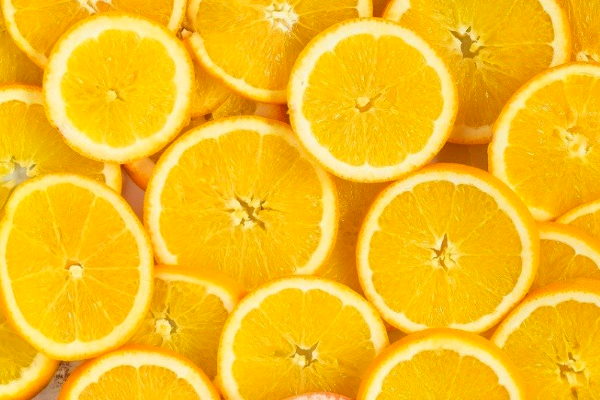
An orange is a citrus fruit with a bright rind and juicy, segmented flesh inside. It ranges from sweet to sharp depending on the variety. Oranges are eaten fresh, juiced and used across cooking and baking all over the world.
That bright, tangy flavour pairs well with softer, milder foods. Once your baby is used to citrus, try small orange pieces alongside banana, or fold a little into a bowl with strawberries.
Orange nutrition for babies
Oranges are famous for vitamin C, and they bring fibre and folate too.
| Nutrient | Per 100 g (raw) |
|---|---|
| Energy | 47 kcal |
| Carbohydrate | 11.8 g |
| of which sugars | 9.4 g |
| Fibre | 2.4 g |
| Protein | 0.9 g |
| Vitamin C | 53 mg |
| Folate | 30 mcg |
Typical values for a raw orange. Source: USDA FoodData Central.
When can babies eat orange?
We show 12 months as a cautious start because of the acidity, but there's no rule against trying citrus earlier once solids are going well. Whenever you begin, the prep is the same:
Some families offer citrus from around 6 to 9 months. If you do, remove all the membrane and give tiny, soft pieces of flesh only, and watch for a mouth rash.
Give small pieces of peeled, deseeded segment with the chewy skin removed.
Most toddlers can manage soft segments cut in half, still with pips and thick membrane taken out. Softer fruits such as papaya need none of this prep.
Tip: the chewy skin around each segment is the fiddly bit. Peel it off and you are left with just the soft flesh, which is far easier and safer for a baby to eat.
Health benefits of oranges for babies
Vitamin C
Oranges are loaded with vitamin C for the immune system, and it helps your baby absorb iron from other foods.
Fibre
Whole orange segments carry fibre that supports digestion, which juice leaves behind.
Hydrating
Oranges are juicy and refreshing, a nice way to top up fluids on a warm day.
Their sharpness is a fun contrast next to sweet, soft foods. Serve small pieces with yogurt, or find more first fruits in our fruits guide.
How to serve oranges safely
Do
- Peel off the skin, pith and membrane.
- Remove every pip.
- Cut the soft flesh into small pieces.
- Watch for a mild, harmless mouth rash.
Avoid
- Whole segments with the chewy skin on.
- Pips, which are a choking risk.
- Orange juice as a drink.
- Adding sugar to sweeten it.
Risks and safety
Oranges are low on the allergy scale, and the red rash some babies get around the mouth is a contact reaction from the acid, not a true allergy. The bigger jobs are removing pips and the tough membrane, both of which are choking risks if left on. Lychee needs the same careful prep for the same reason.
Introducing new foods: offer orange on its own the first time and watch how your baby reacts. For a clear guide to starting solids, the American Academy of Pediatrics is a reliable source.
Easy orange recipe (12 months)
Orange segments the safe way
Makes 1 to 2 baby portions, from 12 monthsIngredients
- 1 sweet orange
- A bowl of plain yogurt to dip in (optional)
Method
- Peel the orange and pull away the white pith and stringy membrane.
- Open the segments, remove any seeds and the tough skin around each one, keeping just the soft flesh.
- Cut the flesh into small pieces and serve, on their own or dipped in yogurt.
Orange FAQ
When can babies eat orange?
Orange is acidic, so this guide shows a cautious start of 12 months, though many families try citrus earlier from around 6 to 9 months. Whenever you start, peel it, remove the pith, seeds and tough membrane, and serve small pieces.
Why do oranges cause a rash around the mouth?
Citrus is acidic, and that can leave a red patch around a baby's mouth on contact. It is not usually a true allergy and tends to fade quickly. A smear of plain barrier cream before eating can help.
How do I prepare an orange for my baby?
Peel it, pull off as much of the white pith and stringy membrane as you can, take out any seeds, then cut the segments into small pieces. The membrane is chewy and hard for little ones to manage.
Can babies drink orange juice?
It is better to skip juice. It is high in sugar and acid and easy to overdo, and it is tough on new teeth. Whole fruit gives the vitamin C plus fibre without the downsides.
Sources
- Orange, Wikipedia.
- FoodData Central, U.S. Department of Agriculture.
- Starting Solid Foods, American Academy of Pediatrics.
This article is general information, not medical advice. Every baby is different. Talk to your doctor, health visitor or paediatrician about your own baby, and about starting solids or any allergy concerns.