Can Babies Eat Shrimp?
Yes, with care. Shrimp can go in from around 6 months as one of the common allergens to introduce, though plenty of families wait a bit. It is a shellfish, so watch closely the first few times. Cook it fully, and chop it very finely, because a rubbery piece is a real choking risk. The start age shown here is a more cautious 12 months.
Shrimp is a food with two big flags on it, so it is worth reading before you serve it. It is a shellfish, one of the most common allergens, and it is firm and springy, which makes it a choking risk if it is not chopped small. Handle both and it becomes a lean, protein-rich food your baby can enjoy.
What is shrimp?
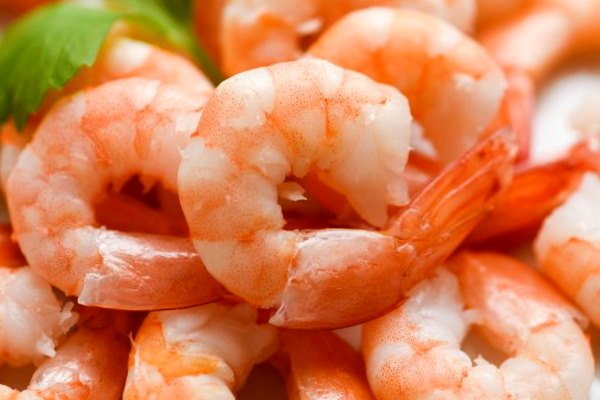
Shrimp, also called prawns depending on where you live, are small shellfish with a firm, pinkish flesh once cooked. They belong to the crustacean group, along with crab and lobster, all of which are common allergens. For babies, only fully cooked, shelled, finely chopped shrimp is suitable.
Once your baby has safely tried shrimp, it works well folded into soft, mild dishes. Stir a little finely chopped shrimp through soft rice and peas for an easy meal.
Shrimp nutrition for babies
Shrimp is very lean, with lots of protein and useful minerals like selenium and iodine, plus vitamin B12.
| Nutrient | Per 100 g (cooked) |
|---|---|
| Energy | 99 kcal |
| Protein | 24 g |
| Fat | 0.3 g |
| Vitamin B12 | 1.4 mcg |
| Selenium | 40 mcg |
Typical values for cooked shrimp. Source: USDA FoodData Central.
When can babies eat shrimp?
Shellfish can be introduced from around 6 months as an allergen, though it is often left a little later, and the start age shown here is 12 months. Whenever you start, cook it well and chop it small:
If introducing early, blend a small amount of fully cooked shrimp into a smooth, soft dish and watch your baby closely.
Mix very finely chopped cooked shrimp through soft rice, pasta or vegetables.
Offer small, soft pieces of well-cooked shrimp your child can chew, keeping a close eye as always.
Allergen: shellfish is a common allergen. Introduce shrimp on its own, offer a small amount, and watch for signs like hives, swelling, vomiting or breathing trouble. Any breathing difficulty or facial swelling needs urgent medical help.
Health benefits of shrimp for babies
Lean protein
Shrimp packs a lot of protein into a small, low-fat portion, useful for a growing baby.
Vitamin B12
It provides vitamin B12, which the body needs for healthy nerves and blood.
Minerals
Shrimp gives selenium and iodine, minerals that support the thyroid and overall growth.
Shrimp is one of several common allergens worth working through in the first year. If your baby has already had fish like salmon, shellfish is a natural next step to introduce carefully.
How to serve shrimp safely
Do
- Cook shrimp fully until pink and firm.
- Remove the shell, tail and dark vein.
- Chop it very finely or blend it.
- Introduce it on its own and watch closely.
Avoid
- Whole or large pieces, which can choke.
- Raw or undercooked shrimp.
- Salty, breaded or battered shrimp.
- Introducing it alongside other new foods.
Risks and safety
Shrimp brings both of the classic risks together: a common allergy and a choking shape. Manage the allergy by introducing it carefully, on its own, with a close eye. Manage choking by cooking it fully and chopping it very small. If your baby is higher risk, get advice first.
Higher risk babies: babies with severe eczema or another food allergy have a greater chance of allergy. Speak to your doctor before shellfish. The American Academy of Pediatrics has guidance on introducing common allergens.
Easy shrimp recipe (from 6 months, with care)
Shrimp, rice and pea mash for baby
Makes 2 baby portionsIngredients
- 3 cooked shrimp, shell and vein removed
- 3 tbsp soft cooked rice
- 2 tbsp cooked peas
- Water or unsalted stock to loosen
Method
- Check the shrimp are fully cooked, then chop them very finely or blend them.
- Mash the rice and peas together and stir in the finely chopped shrimp.
- Loosen with a little water or stock until soft and smooth, then cool. Offer a small amount the first time and watch your baby.
Shrimp FAQ
When can babies eat shrimp?
Shrimp can be introduced from around 6 months as one of the common allergens, though many families wait a little longer. Whenever you start, cook it thoroughly and chop it very finely, since it is firm and can be a choking risk.
Is shrimp an allergen?
Yes. Shrimp is a shellfish, and shellfish is one of the most common food allergens. Introduce it on its own, offer a small amount, and watch your baby closely, especially the first few times.
How do you prepare shrimp for a baby?
Cook it fully until it is pink and firm, remove the shell, tail and dark vein, then chop it very finely or blend it into a soft dish. Never serve chewy, rubbery pieces to a young baby.
Which babies should be extra careful with shrimp?
Babies with severe eczema or another food allergy are at higher risk of allergy in general. If that is your baby, talk to your doctor before introducing shellfish, as they may suggest doing it carefully or under advice.
Sources
- Shrimp, Wikipedia.
- FoodData Central, U.S. Department of Agriculture.
- Starting Solid Foods, American Academy of Pediatrics.
This article is general information, not medical advice. Every baby is different. Talk to your doctor, health visitor or paediatrician about your own baby, and about starting solids or any allergy concerns.