Can Babies Eat Ginger?
Yes, from 6 months, in cooking amounts. Ginger gets grouped with chilli because both turn up in curries, but the warmth in ginger comes from a completely different compound and it does not burn. Grated finely into a cooked dish it is a good way to make vegetables more interesting. Ginger supplements and strong teas are a separate question, and the answer there is no.
Ginger is one of the more useful things you can add to baby food, because it makes plain vegetables taste like they were cooked deliberately rather than just boiled. It is also the subject of a lot of home remedy advice aimed at babies, and that is the part of this page worth reading carefully, because culinary ginger and medicinal ginger are not the same thing.
What is ginger?
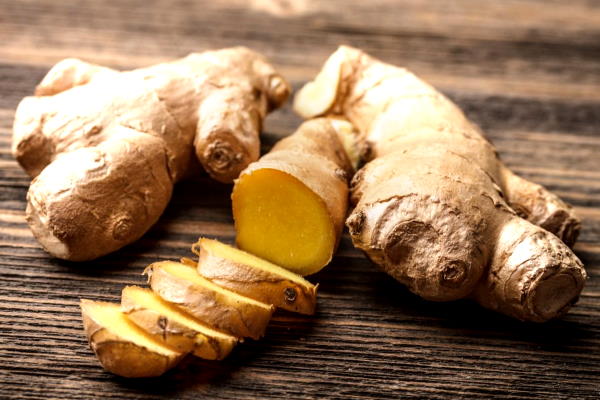
Ginger is the rhizome of a flowering plant, closely related to turmeric and cardamom. Its warmth comes from gingerol, which produces a mild pungency quite unlike the capsaicin in chilli. Cooking converts some of the gingerol into gentler compounds, which is why cooked ginger is milder than raw.
Our turmeric page covers its close relative, and the spices guide explains the spiced versus spicy distinction that ginger sits on the friendly side of.
Ginger nutrition
Used in tiny amounts, so this is context rather than a serving.
| Nutrient | Per 100 g fresh | Per quarter teaspoon grated |
|---|---|---|
| Energy | 80 kcal | Under 1 kcal |
| Carbohydrate | 18 g | 0.1 g |
| Fibre | 2 g | Trace |
| Potassium | 415 mg | 2 mg |
| Magnesium | 43 mg | Trace |
| Salt | Trace | Trace |
Typical values for fresh ginger root. Ginger is a flavouring rather than a nutrient source. Source: USDA FoodData Central.
Using ginger by age
Cooked and finely grated from the start:
Finely grated fresh ginger or ground dried ginger softened into a vegetable puree, a dal or a mild curry. Start with a very small amount.
Ginger works well with carrot, sweet potato, chicken and pear. It is also good in baking, where ground ginger adds warmth to muffins and pancakes.
No restriction on culinary use. Crystallised ginger and stem ginger in syrup are largely sugar, so those follow the added sugar guidance instead. Ginger also turns up in fermented dishes such as kimchi, which bring salt and chilli along with it.
Grate it finely, never chop it coarsely: fresh ginger is full of tough fibres that run the length of the root, and a chunk or a coarse shred leaves stringy pieces that a baby cannot break down. Use the fine side of a grater or a microplane, and cook it into the dish so it disappears.
Ginger and carrot puree
Frying the ginger briefly before adding the vegetables brings the flavour out:
Ginger and carrot puree
Makes 3 baby portions, from 6 monthsIngredients
- 3 carrots, chopped
- Quarter teaspoon finely grated fresh ginger
- 1 teaspoon olive oil
- A pinch of ground cumin
- Water for cooking
Method
- Soften the grated ginger in the olive oil for 30 seconds, then add the cumin.
- Add the carrots and enough water to cover, and simmer for 20 minutes until completely soft.
- Blend smooth for a younger baby, or mash for texture from around 9 months.
- Loosen with the cooking water until it is the right consistency, and cool before serving.
Risks and safety
In cooking quantities ginger is very low risk. Allergy is rare, there is no salt or sugar involved, and the warmth is mild enough that most babies do not object. Introduce it on its own the first time as you would any new food.
The caution belongs to the medicinal side. Ginger tea, ginger supplements, concentrated extracts and gripe waters containing ginger deliver far more than a pinch in dinner, and their safety in infants has not been established. Ginger may also affect blood clotting at high doses, which is worth mentioning to a doctor before surgery. If your baby is unsettled, refluxy or windy, that is a conversation with your health visitor rather than something to treat with a herbal preparation. Crystallised and stem ginger are mostly sugar, covered in our sugar guide.
Ginger FAQ
Can babies eat ginger?
Yes, from around 6 months, in the amounts used in cooking. Ginger has a gentle warmth rather than chilli heat, so it adds interest to food without burning. Grate it finely or use ground ginger, and introduce it on its own the first time as with any new food.
Is ginger spicy for a baby?
It has a mild warming quality that comes from gingerol, which is a different compound from the capsaicin in chilli. Most babies accept it without complaint, especially cooked, since cooking mellows it. Fresh raw ginger is sharper than cooked, so start with a little in a cooked dish.
Can I give ginger to a baby for nausea or teething?
Not as a remedy. Ginger has some evidence for nausea in adults, but doses used in studies are far higher than culinary amounts, and its safety and dosing in infants have not been established. Ginger tea, supplements and concentrated extracts are not appropriate for a baby. Speak to your doctor about symptoms instead.
How do I prepare ginger for a baby?
Peel it and grate it finely on the small side of a grater, so there are no fibrous strands, then cook it into the dish. Ground dried ginger is even easier and works well in baking and porridge. Avoid stem ginger in syrup and crystallised ginger, both of which are largely sugar.
Sources
- Ginger, Wikipedia.
- Feeding and Nutrition, American Academy of Pediatrics.
- FoodData Central, U.S. Department of Agriculture.
This article is general information, not medical advice. Every baby is different. Talk to your doctor, health visitor or paediatrician about your own baby, and about starting solids or any allergy concerns.