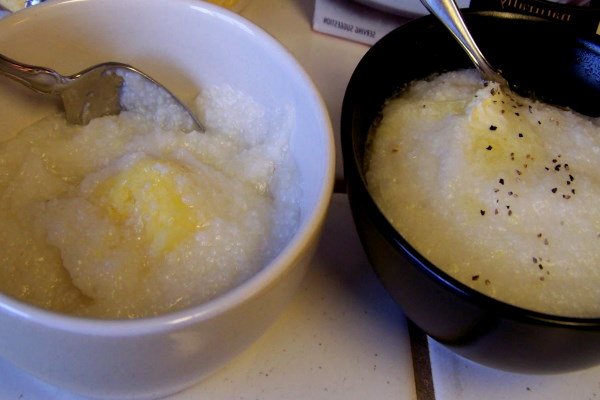
Can Babies Eat Grits?
Yes, from 6 months, cooked soft and plain. Grits are corn porridge, and there is nothing about corn that a baby cannot have. What makes people hesitate is the way grits are normally served, swimming in butter, salt and cheese. Cook the baby's portion before any of that goes in and you have a perfectly good first grain.
Grits are one of those foods where the answer is almost entirely about preparation. The grain itself is corn, which babies can have from six months, and the porridge texture is close to ideal. Everything that makes grits worth eating to a grown up, the salt and the butter and the sharp cheese, is the part to leave out for the first year.
What are grits?
Grits are made from dried corn kernels ground coarsely and boiled into a thick porridge. Stone ground grits keep more of the germ and hull, so they take longer to cook and have more flavour and fibre. Quick and instant grits are ground finer and partly pre-cooked. Hominy grits are made from corn treated with an alkali, a process that improves the availability of niacin.
If you want more on the underlying grain, our corn page covers it, and oats make a good alternative breakfast grain with more fibre and iron.
Grits nutrition
Mostly starch, with the iron and B vitamins coming from enrichment rather than the corn itself.
| Nutrient | Per 100 g cooked |
|---|---|
| Energy | 59 kcal |
| Carbohydrate | 13 g |
| Protein | 1.4 g |
| Fibre | 0.7 g |
| Iron, if enriched | 0.6 mg |
| Folate, if enriched | 39 mcg |
| Salt, plain | Trace |
Typical values for cooked enriched grits with no added salt or butter. Source: USDA FoodData Central.
When can babies eat grits?
Texture and toppings are what change, rather than the grain:
Cook with extra liquid until completely smooth, then thin with milk or formula. No salt, no butter. Serve alongside vegetables or a protein rather than alone.
Cooled grits firm up enough to cut into strips, which makes decent self feeding food. A little unsalted butter is fine now.
Grated mild cheese can join in once the salt allowance rises to about 2 g a day. Keep it modest, since cheese is salty in its own right.
Cook them longer than the packet says: grits that are fine for an adult can still have a faint grittiness that a baby finds difficult. Give them extra time and extra liquid, and check by rubbing a little between your fingers. It should feel completely smooth, with no sandy texture at all.
Soft baby grits
Slow and wet is the whole technique. Add the cheese only if your baby is over one:
Soft baby grits with cheese
Makes 2 baby portions, from 6 months without the cheeseIngredients
- 3 tablespoons stone ground grits
- 200 ml water or whole milk
- 1 tablespoon grated mild cheese, from 12 months
- 1 teaspoon unsalted butter
Method
- Bring the liquid to a simmer and whisk in the grits slowly to avoid lumps.
- Cook gently for 20 to 25 minutes, stirring often and adding more liquid as it thickens.
- Check the texture is completely smooth with no grittiness left, and stir in the butter.
- Add the cheese if your baby is over 12 months, then cool thoroughly before serving.
Risks and safety
Corn allergy is uncommon, and grits are among the lower risk foods here. The realistic concerns are all about how they are served. Restaurant and diner grits are heavily salted and buttered, and instant sachets often carry added salt too, so check the packet or cook from plain stone ground. Steamed idli solve the same breakfast problem without any of that.
Two smaller points. Grits thicken dramatically as they cool, so a bowl that looked right on the stove can set almost solid by the time it reaches the highchair. Loosen it with extra milk just before serving. And they hold heat well in the middle, so stir thoroughly and test the temperature rather than trusting the surface. Our salt guide has the daily limits if cheese or butter are joining the bowl.
Grits FAQ
Can babies eat grits?
Yes, from around 6 months. Grits are simply coarsely ground corn cooked into a porridge, which makes them a reasonable first grain. Cook them longer and wetter than you would for yourself so they are properly soft, and leave out the salt, butter and cheese.
Are grits nutritious for babies?
Moderately. Grits are mostly starch, so they are a source of energy rather than a nutrient dense food. Enriched grits are fortified with iron and B vitamins, which helps. Serve them alongside something with protein and vegetables rather than treating them as a meal on their own.
What is the difference between grits and polenta?
Very little, in practice. Both are coarsely ground corn cooked into porridge. Grits are traditionally made from dent corn and are common in the American South, while polenta is usually flint corn and Italian. For feeding a baby they are interchangeable.
Can grits be a choking risk?
Not if they are cooked properly. Undercooked grits stay gritty and can be lumpy, which is harder for a baby to manage. Cook them slowly with plenty of liquid until completely smooth and soft, and add extra milk or water if they stiffen as they cool.
Sources
- Grits, Wikipedia.
- Feeding and Nutrition, American Academy of Pediatrics.
- FoodData Central, U.S. Department of Agriculture.
This article is general information, not medical advice. Every baby is different. Talk to your doctor, health visitor or paediatrician about your own baby, and about starting solids or any allergy concerns.