Can Babies Eat Oats?
Yes, from 6 months, and they are hard to beat as a first grain. Oats cook down soft, blend to any texture you need, carry useful iron and fibre, and almost never cause allergy. The one thing worth knowing is that oats are not reliably gluten free unless the packet says so, which surprises a lot of people.
Oats are the grain most first foods lists put at the top, and for once the conventional advice is right. They are cheap, they keep forever, they cook in five minutes, and they can be a thin puree at six months or a chunky bowl at eighteen without changing the ingredient. The differences between the types on the shelf are worth understanding, because they are not interchangeable. They are one of the more useful store cupboard staples to keep in.
The types of oats
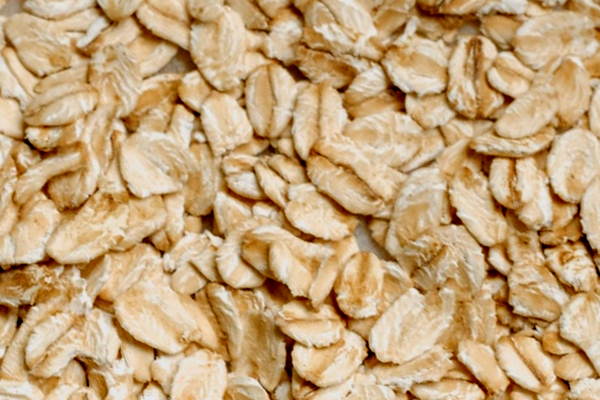
All oats start as the same groat, and the processing is what differs. Steel cut oats are groats chopped into pieces, so they stay chewy and take 20 to 30 minutes. Rolled oats are steamed and flattened, cooking in about five minutes. Instant oats are rolled thinner and pre-cooked, so they need only hot water, and quite often come with sugar already added.
Our oatmeal page covers the finished porridge in more detail, including how to vary the texture as your baby grows.
Oat nutrition
Good fibre, decent protein and a useful iron contribution for a grain.
| Nutrient | Per 100 g dry |
|---|---|
| Energy | 389 kcal |
| Carbohydrate | 66 g |
| Fibre | 11 g |
| Protein | 17 g |
| Fat | 7 g |
| Iron | 4.7 mg |
| Magnesium | 177 mg |
Typical values for dry rolled oats. A baby portion is a few tablespoons. Source: USDA FoodData Central.
When can babies eat oats?
Same grain throughout, just a different texture at each stage:
Rolled oats simmered soft and blended, thinned with breast milk, formula or whole milk. Stir in fruit puree for sweetness and vitamin C.
Stop blending and let the texture come through. Oats also work in soft baked oat fingers, which make good self feeding food.
Check instant oat sachets: flavoured instant oats are frequently more than a fifth sugar, which is not what you want under two. Plain oats plus mashed fruit takes an extra two minutes and gives you the same bowl without it. See our sugar guide for why added sugar is worth avoiding early.
Creamy first oats
The template most families end up using every morning for a year:
Creamy first oats
Makes 2 baby portions, from 6 monthsIngredients
- 3 tablespoons rolled oats
- 150 ml whole milk, breast milk or formula
- Half a ripe banana
- A pinch of cinnamon
Method
- Simmer the oats with the milk for about 5 minutes, stirring, until soft and thick.
- Mash the banana thoroughly and stir it through the warm oats.
- Blend smooth for a younger baby, or leave it textured from around 9 months.
- Add the cinnamon, loosen with extra milk if it is stiff, and cool before serving.
Risks and safety
Oats are among the lowest risk foods on this site. True oat allergy is rare, though some children react to avenin, the oat protein, and children with coeliac disease need certified gluten free oats and should introduce them with medical guidance.
Two practical points. Dry oats are not a finger food, since raw flakes are hard to swallow and can be inhaled, so always cook them. And go steadily with quantity at first: oats are high in fibre, and a sudden large increase can leave a baby uncomfortable and constipated if they are not drinking enough. The American Academy of Pediatrics lists iron fortified single grain cereals, including oat cereal, among suitable first foods.
Oats FAQ
Can babies eat oats?
Yes, from around 6 months. Oats are one of the best first grains: soft when cooked, rich in fibre and iron, and rarely a cause of allergy. Rolled oats cooked into a smooth porridge are the easiest starting point, and you can thin them with breast milk, formula or whole milk.
Are oats gluten free?
Oats themselves contain no gluten, but most are grown, harvested and milled alongside wheat, so ordinary oats are usually contaminated with it. If gluten is a concern in your family, buy oats specifically labelled gluten free. For everyone else, ordinary oats are fine.
Which type of oats is best for babies?
Rolled oats, sometimes called old fashioned oats, are the practical choice. They cook down soft in a few minutes and blend smooth. Steel cut oats are chewier and need longer cooking. Instant oat sachets are convenient but usually contain added sugar, so buy plain ones.
Do oats help with iron?
They contribute, and iron matters a lot from 6 months as a baby's own stores run down. Oats contain non-heme iron, which is absorbed better alongside vitamin C, so stirring in fruit like berries or a little mashed kiwi genuinely helps the iron do its job.
Sources
- Oat, Wikipedia.
- Feeding and Nutrition, American Academy of Pediatrics.
- FoodData Central, U.S. Department of Agriculture.
This article is general information, not medical advice. Every baby is different. Talk to your doctor, health visitor or paediatrician about your own baby, and about starting solids or any allergy concerns.