Can Babies Eat Mustard?
A trace in cooking from 12 months. Mustard is worth knowing about for a reason most people miss: it is one of the 14 declarable allergens in the UK and Europe, sitting alongside milk, egg and nuts. Add to that the salt and heat in prepared mustard, and there is little reason to rush it. A pinch of mustard powder in a cheese sauce is the gentle way in.
Mustard is the allergen nobody expects. Ask most parents to list the major ones and they will get to milk, egg, nuts, fish and soy without reaching it, yet it sits on the official UK and European list and has to be declared on every label. That alone makes it worth a page, quite apart from the fact that a spoonful of English mustard would ruin a toddler's afternoon.
What is mustard?
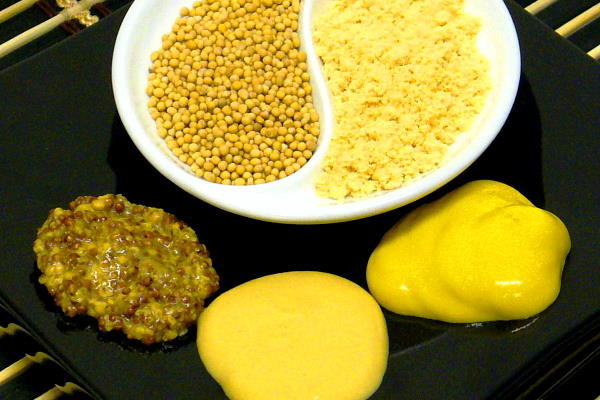
Mustard is made from the seeds of mustard plants, which are in the same family as cabbage and broccoli. The seed itself is not hot. The heat appears when the crushed seed meets liquid and an enzyme reaction releases pungent compounds, which is why English mustard mixed fresh is fierce and mellows over time.
Our spices guide covers the wider question of heat versus flavour for babies, which applies here too.
Mustard nutrition
Used in tiny amounts, so the salt line is what matters rather than the nutrients.
| Nutrient | Per 100 g prepared | Per teaspoon (5 g) |
|---|---|---|
| Energy | 67 kcal | 3 kcal |
| Salt | 3.0 g | 0.15 g |
| Protein | 4 g | 0.2 g |
| Fat | 4 g | 0.2 g |
| Selenium | 25 mcg | 1.2 mcg |
| Calcium | 58 mg | 3 mg |
Typical values for prepared yellow mustard. Mustard powder contains no added salt. Source: USDA FoodData Central.
When can babies have mustard?
The form determines the age more than anything:
Prepared mustard is salty, and a baby's whole daily limit is under 1 g. There are plenty of gentler ways to add flavour at this age.
A little mustard powder in a cheese sauce or a marinade introduces the flavour without the salt or the raw pungency. Offer it on its own first, since it is an allergen.
American style yellow mustard is mild enough for most toddlers in small amounts. English and hot Dijon are worth holding back longer, since the heat is genuinely sharp.
Mustard hides in a lot of products: because it is a declarable allergen in the UK and EU, it must be listed, and once you start looking you will find it in mayonnaise, salad dressings, sauces, marinades, sausages, pickles and many ready meals. If mustard allergy is ever suspected, that label reading matters.
Mild ways to use it
Cooking mellows mustard considerably, which is the easiest route in:
Gentle uses from 12 months
Hold back longer
- English mustard, which is deliberately fierce
- Hot Dijon and horseradish mustards
- Mustard straight from the spoon at any age
- Large amounts of any prepared mustard, because of salt
Risks and safety
Allergy is the reason mustard gets more attention than other condiments. It is one of the 14 allergens requiring mandatory declaration in the UK and EU, and while mustard allergy is uncommon, reactions can be serious and it can cross-react with other plants in the same family. Introduce it on its own, earlier in the day, and watch for hives, swelling, vomiting or an itchy mouth. Wheezing or breathing difficulty needs emergency help.
Beyond allergy, the concerns are ordinary. Prepared mustard is salty, so count it toward the daily total in our salt guide. The heat is unpleasant rather than dangerous, though a mouthful will produce tears and a refusal to try it again for a long while. If that happens, milk or yogurt settles it better than water.
Mustard FAQ
Can babies eat mustard?
A small amount cooked into food, from around 12 months. Two things hold it back before then: prepared mustard is salty and pungent, and mustard is a recognised allergen in the UK and EU. A trace in a sauce or dressing is fine once your baby is a year old.
Is mustard an allergen?
Yes. Mustard is one of the 14 allergens that must be declared on food labels in the UK and European Union, though it is not on the equivalent list in the United States. Mustard allergy is uncommon but reactions can be significant, so introduce it on its own and watch as you would with any allergen.
Is mustard too spicy for a baby?
It depends on the type. English and Dijon mustard carry a sharp heat that comes from compounds released when the seed is crushed, and a small mouth finds that genuinely unpleasant. American yellow mustard is much milder. Wholegrain and mild varieties are the sensible starting point.
Is mustard powder or seed different from prepared mustard?
Nutritionally the seed is just a seed, with no added salt. Prepared mustard is seed plus vinegar, salt and often sugar, which is where most of the caution comes from. A pinch of mustard powder in a cheese sauce is a much smaller thing than a spoon of the jarred condiment.
Sources
- Mustard (condiment), Wikipedia.
- Food allergy and intolerance, Food Standards Agency.
- FoodData Central, U.S. Department of Agriculture.
This article is general information, not medical advice. Every baby is different. Talk to your doctor, health visitor or paediatrician about your own baby, and about starting solids or any allergy concerns.