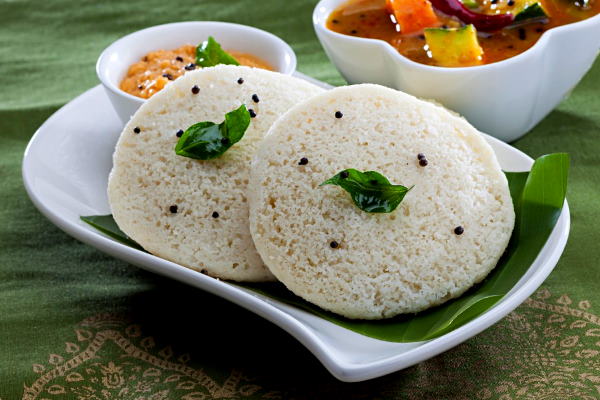
Can Babies Eat Idli?
Yes, from 6 months, and it is close to an ideal first food. Idli ticks nearly every box: steamed not fried, naturally soft, mildly fermented so the minerals are more available, and made from two ingredients. South Indian families have been weaning babies onto it for generations. The only change needed is leaving the salt out of the batter.
Most traditional first foods around the world turn out to be sensible when you look at why they were chosen, and idli is a particularly good example. Steaming means no added fat, much as it does for grits. Fermenting means better mineral absorption and easier digestion. The texture is soft enough for gums and firm enough to hold as a strip. It was solving the weaning problem long before anyone wrote a guide about it.
What is idli?
Idli is a savoury steamed cake from South India, made from a batter of parboiled rice and skinned urad dal, soaked separately, ground, then left to ferment overnight. The batter is spooned into moulds and steamed. There is no oil, no sugar and, in the baby version, no salt.
Our Indian food page covers the wider cuisine for babies, and lentils explains the dal side.
Idli nutrition
Light, low in fat, and a reasonable protein contribution for a rice based food.
| Nutrient | Per idli (about 40 g) |
|---|---|
| Energy | 58 kcal |
| Carbohydrate | 12 g |
| Protein | 2 g |
| Fat | 0.2 g |
| Fibre | 0.8 g |
| Iron | 0.4 mg |
| Salt, unsalted batter | Trace |
Typical values for a plain steamed idli made without salt. Source: USDA FoodData Central.
Serving idli by age
The same idli, presented three ways:
Mash a warm idli with a little water, milk or thin unsalted dal until spoonable. It breaks down easily and needs no blending.
Cut into strips a baby can grip. Idli holds its shape well enough to pick up but is soft enough to squash, which is exactly the right combination.
A little unsalted coconut chutney or mild sambar can join in. Watch the salt in anything shop bought, and keep chilli out until later.
It is the chutney and sambar that need watching, not the idli: both are usually salted, and sambar often contains chilli. Serve the baby's idli plain or with a spoon of unsalted dal, and add the accompaniments to the adult plates only. Shop bought idli and restaurant versions are salted too.
No salt baby idli
Salt is not needed for fermentation, so the baby batch works exactly the same way:
No salt baby idli
Makes about 8 small idli, from 6 monthsIngredients
- 1 cup idli rice or parboiled rice
- Quarter cup urad dal, skinned
- Half a teaspoon fenugreek seeds
- Water for soaking and grinding
Method
- Soak the rice, dal and fenugreek separately for 5 hours, then drain.
- Grind the dal to a light fluffy paste and the rice to a slightly coarse one, then combine without salt.
- Cover and leave to ferment somewhere warm for 8 to 12 hours, until risen and bubbly.
- Spoon into greased idli moulds and steam for 10 to 12 minutes, then cool and mash or cut into strips.
Risks and safety
Idli is among the lowest risk foods on this site. It contains no major allergens in the plain version, no added fat or sugar, and the texture is naturally suited to a baby. That puts it well ahead of most other foods served at breakfast. Rice and urad dal are both rarely allergenic.
Two small points. Rice contains trace arsenic, which is why varied grains rather than rice at every meal is the general advice, and our rice page covers that. And steamed idli holds heat in the centre for longer than the surface suggests, so break one open and check before serving. Beyond that, the caution is all about what goes alongside it rather than the idli itself.
Idli FAQ
Can babies eat idli?
Yes, from around 6 months. Idli is one of the better first foods there is: steamed rather than fried, naturally soft, mildly fermented and made from just rice and lentils. Make the baby's batch without salt, and mash or cut it into strips depending on their age.
Why is idli good for babies?
The fermentation is the clever part. Soaking and fermenting rice and urad dal breaks down some of the phytates that block mineral absorption, so the iron and zinc are easier for a baby to take up. It also makes the batter easier to digest, and steaming adds no fat or salt.
How do I serve idli to a baby?
From 6 months, mash it with a little warm water, milk or thin dal until soft and spoonable. From about 9 months, cut it into finger sized strips for self feeding. Skip the coconut chutney and sambar early on, since both are usually salted and sambar can be spicy.
Can I make idli without salt?
Yes. Salt is traditionally added to the batter, but it is not needed for fermentation, which is driven by the wild bacteria and yeasts on the lentils. Ferment the batter unsalted, or split the batch and salt only the adult portion after fermenting.
Sources
- Idli, Wikipedia.
- Complementary feeding, World Health Organization.
- FoodData Central, U.S. Department of Agriculture.
This article is general information, not medical advice. Every baby is different. Talk to your doctor, health visitor or paediatrician about your own baby, and about starting solids or any allergy concerns.