Can Babies Eat Jicama?
Cooked soft, from 6 months. Never raw, and never any part except the peeled root. Jicama is a pleasant mild root vegetable with a genuine quirk: the plant it comes from is toxic apart from the root itself. Peel it well, cook it until it gives, and it is a good early vegetable. Raw, it is as crunchy as an apple and belongs on the same choking list.
Jicama is worth knowing about for one specific reason, which is that it is a common vegetable with an uncommon warning attached. Almost every part of the plant except the root is genuinely poisonous, containing the same compound used as a natural insecticide, which is not something you have to think about with yams. That sounds alarming and is entirely manageable: buy the root, peel it properly, and you will never encounter the problem.
What is jicama?
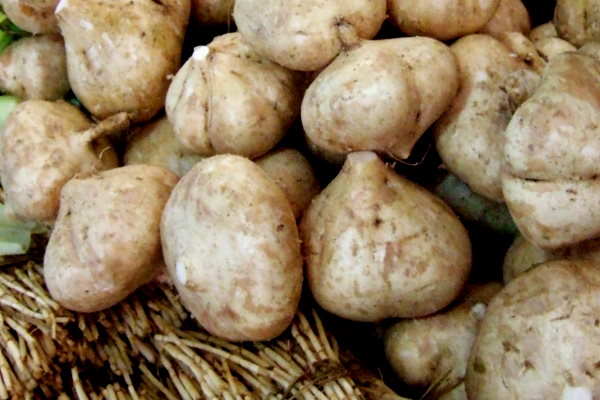
Jicama, also called yam bean or Mexican turnip, is the tuberous root of a vine in the legume family, native to Mexico and Central America. The root is round with papery brown skin and crisp white flesh. It is around 90 percent water, mildly sweet, and a good source of prebiotic fibre called inulin.
If you want a similar mild root vegetable with none of these caveats, yams and carrots both work well from six months.
Jicama nutrition
Low in energy, high in water, and notable for its prebiotic fibre.
| Nutrient | Per 100 g |
|---|---|
| Energy | 38 kcal |
| Water | 90 g |
| Fibre | 4.9 g |
| Vitamin C | 20 mg |
| Carbohydrate | 9 g |
| Potassium | 150 mg |
| Salt | Trace |
Typical values for raw jicama root. Source: USDA FoodData Central.
Serving jicama by age
Texture is the whole story, and it takes a while before raw is reasonable:
Steam or boil peeled sticks for 15 to 20 minutes until they squash between your fingers. Serve as finger strips or mash into a puree.
Still cooked. Jicama takes flavour well, so a little lime and cumin makes it more interesting as they get pickier.
Raw jicama is as crunchy as apple and belongs with other raw hard vegetables, which are not recommended under four. After that it is a good crunchy snack.
Peel it generously: the brown skin and the fibrous layer just beneath it should both come off. Rotenone is concentrated in the skin, seeds, pods and leaves rather than the flesh, so a thorough peel is the whole safety step. If you ever grow jicama, keep children away from the pods and seeds entirely.
Soft steamed jicama sticks
Jicama takes far longer to soften than most root vegetables, so give it time:
Soft steamed jicama sticks
Makes 3 baby portions, from 6 monthsIngredients
- Half a small jicama root
- 1 teaspoon olive oil
- A pinch of ground cumin
- A squeeze of lime
Method
- Peel the jicama thoroughly, removing all the brown skin and the fibrous layer beneath it.
- Cut into finger sized sticks, about the width of two adult fingers.
- Steam or boil for 15 to 20 minutes, until a stick squashes easily between your fingers.
- Toss with the olive oil, cumin and lime, and cool before serving.
Risks and safety
Three things, all straightforward. The plant toxicity is real but confined to the parts you would not eat anyway, so peel well and discard skin, seeds and pods. The choking risk is about raw texture, and cooking removes it entirely, which is the same trade off you make with raw lettuce. And jicama allergy is rare, though it is technically in the legume family, so a baby with known legume allergies is worth watching on first introduction.
One smaller note: jicama is high in inulin, a fermentable fibre, which is good for gut bacteria but can cause wind and bloating if a lot is eaten at once. Start with small portions, as you would with any high fibre food, and increase gradually.
Jicama FAQ
Can babies eat jicama?
Cooked until soft, yes, from around 6 months. Raw jicama is crisp and dense, closer to raw apple or carrot, which makes it a choking risk for a young child. Steam or boil it until it gives easily, and always peel it thoroughly first.
Is any part of the jicama plant poisonous?
Yes, which surprises people. Only the peeled root is edible. The skin, the leaves, the stems, the pods and especially the seeds contain rotenone, a natural insecticide that is toxic if eaten. Peel the root generously and discard everything else. This is not a reason to avoid jicama, just to prepare it properly.
Why is raw jicama a choking hazard?
It stays crunchy no matter how thinly you slice it, and it does not soften with saliva. That is the same profile as raw carrot and raw apple, both of which are on choking hazard lists for under fours. Cooking changes the texture completely and removes the problem.
What does jicama taste like?
Mild, slightly sweet and a little nutty, somewhere between water chestnut and apple. It is very high in water, so it stays juicy, and it has a neutral enough flavour that babies usually accept it easily. Cooked, it softens into something closer to a mild turnip.
Sources
- Pachyrhizus erosus, Wikipedia.
- Choking Prevention, American Academy of Pediatrics.
- FoodData Central, U.S. Department of Agriculture.
This article is general information, not medical advice. Every baby is different. Talk to your doctor, health visitor or paediatrician about your own baby, and about starting solids or any allergy concerns.