Can Babies Eat Natto?
Yes, from around 8 months, chopped. Natto is a standard weaning food across Japan and deserves to be better known elsewhere, because nutritionally it is outstanding: exceptional vitamin K2, good iron and plant protein, and fermentation that makes those minerals easier to absorb. It is soy, so introduce it as an allergen, and chop the strings up.
Natto divides people, usually along the lines of whether they grew up with it. Set the smell and the stringiness aside for a moment, though, and what you have is a fermented bean with a genuinely unusual nutritional profile, eaten by Japanese babies for generations. It is worth trying even if the first encounter makes you laugh.
What is natto?
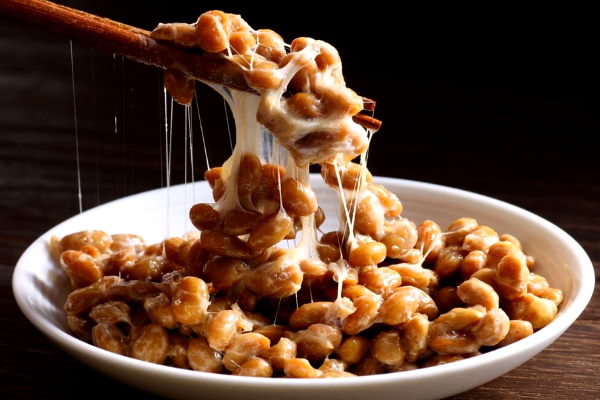
Natto is soybeans fermented with a specific bacterium, Bacillus subtilis. The fermentation produces the characteristic sticky strings, a pungent smell and a strong savoury flavour. It also produces large quantities of vitamin K2 in a form called MK-7, which almost no other food supplies in meaningful amounts.
Our tofu and edamame pages cover the other soy foods, and all three count as the same allergen.
Natto nutrition
The vitamin K2 figure is the striking one, but the iron matters just as much at this age.
| Nutrient | Per 100 g |
|---|---|
| Energy | 212 kcal |
| Protein | 18 g |
| Iron | 8.6 mg |
| Vitamin K2 | Around 1000 mcg |
| Fibre | 5.4 g |
| Calcium | 217 mg |
| Salt, plain | Trace |
Typical values for plain natto without the soy sauce sachet. Source: USDA FoodData Central.
Serving natto by age
Chopping is the constant. What changes is how finely:
Rinse briefly in warm water to cut the stickiness, chop until no long strands remain, and stir through rice or vegetable mash. Introduce on its own, since soy is a major allergen.
Less rinsing needed as they get used to the texture. Still chop through the strands, which otherwise trail everywhere.
Whole beans are fine by now. Keep the soy sauce sachet off a young child's portion, since it is very salty.
Discard the sachets: a natto pack usually comes with soy sauce and hot mustard. Soy sauce is one of the saltiest condiments there is, at roughly 0.9 g of salt per tablespoon, and mustard is both hot and a declarable allergen in the UK and EU. Neither belongs in a baby's portion.
Chopped natto rice for babies
Rice carries the natto and dilutes the stickiness, which is how it is usually served anyway:
Chopped natto rice for babies
Makes 2 baby portions, from 8 monthsIngredients
- Half a pack of natto, about 25 g
- 4 tablespoons cooked soft rice
- 1 tablespoon finely chopped cooked carrot
- A few drops of sesame oil, optional
Method
- Tip the natto into a sieve and rinse briefly under warm water to loosen the stickiness.
- Chop through the beans several times with kitchen scissors until no long strands remain.
- Stir through the warm rice and carrot until evenly mixed.
- Add the sesame oil if using, discard the soy sauce and mustard sachets, and cool before serving.
Risks and safety
Soy is one of the major allergens, so offer natto on its own the first time, earlier in the day, and watch for hives, rash, swelling, vomiting or an itchy mouth within two hours. Wheezing or breathing difficulty needs emergency help. If your baby already tolerates tofu, that is reassuring but not a guarantee, since fermentation changes the proteins.
Two further notes. Vitamin K interacts with anticoagulant medication, so if anyone in the family is on warfarin they should not suddenly add natto to their diet, though this is not usually relevant to babies. And if you use sesame oil, remember sesame is itself a recognised allergen. The beans are soft and small, so choking risk is low once the strands are chopped through.
Natto FAQ
Can babies eat natto?
Yes, from around 8 months, and it is a traditional weaning food in Japan. Natto is fermented soybeans, exceptionally rich in vitamin K2 and iron. Two things to manage: soy is a major allergen, so introduce it carefully, and the sticky strings should be chopped through before serving.
Why is natto sticky, and does that matter?
The stringiness comes from a natural polymer produced during fermentation. It is harmless, but long strands can cling around a baby's fingers and face, and a mouthful of intact strings is awkward to manage. Chopping through the beans several times with scissors or a knife breaks the strands up.
Is natto good for babies?
Nutritionally it is remarkable. Natto is one of the richest known food sources of vitamin K2, provides good plant protein and iron, and the fermentation makes the minerals more available. Japanese guidance commonly introduces it from around 7 to 9 months, chopped and often rinsed briefly.
How do I serve natto to a baby?
Rinse it briefly in warm water to reduce the stickiness and the strong smell, chop through it several times, then stir it into rice or a vegetable mash. Leave out the soy sauce sachet that comes in the pack, which is very salty, and the mustard sachet too.
Sources
- Nattō, Wikipedia.
- Feeding and Nutrition, American Academy of Pediatrics.
- FoodData Central, U.S. Department of Agriculture.
This article is general information, not medical advice. Every baby is different. Talk to your doctor, health visitor or paediatrician about your own baby, and about starting solids or any allergy concerns.