Can Babies Eat Yeast?
Yes, in cooked or deactivated form, from 6 months. Yeast covers three quite different products. Baker's yeast baked into bread is fine. Nutritional yeast flakes are fine and genuinely useful, particularly for vegan babies who need B12. Yeast extract spreads are fine too, but they are extremely salty, which is a separate matter.
Yeast is one of those words that covers several unrelated things, which is why the question comes up at all. Nobody worries about bread. What people actually want to know is whether nutritional yeast is a good idea, whether raw dough matters, and occasionally whether yeast in food causes thrush. Three different answers, and the last one is a firm no.
Three kinds of yeast
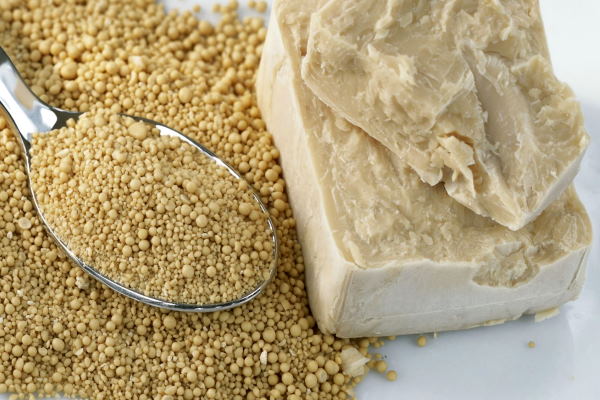
Baker's yeast is a live organism that ferments dough and dies in the oven. Nutritional yeast is the same species grown, harvested and deactivated, then sold as savoury flakes. Yeast extract is what you get when yeast cells are broken down into a concentrated paste, which is where Marmite and Vegemite come from.
Our vegan weaning page covers why B12 matters so much in a plant based diet, and bread covers the everyday baked form.
Which yeast for what
The practical differences in one place:
| Type | Salt | B12 | Suits a baby |
|---|---|---|---|
| Baker's yeast, baked | None | None | Yes, from 6 months |
| Baker's yeast, raw | None | None | No |
| Nutritional yeast flakes | Trace | If fortified | Yes, from 6 months |
| Yeast extract spread | Very high | Yes | Thin scrape, 12 months |
| Brewer's yeast supplement | Varies | Varies | Ask a doctor first |
Nutritional yeast is not always fortified with B12, so check the label if that is why you are buying it. Source: USDA FoodData Central.
Using yeast by age
Straightforward, once the forms are separated out:
Toast fingers and soft bread, plus a pinch of nutritional yeast over vegetables or pasta for a savoury flavour with no salt.
For a vegan baby, fortified nutritional yeast is a useful part of the B12 picture, though usually alongside a supplement rather than instead of one.
Once the salt allowance rises to about 2 g a day, a barely visible scrape of Marmite becomes workable.
Nutritional yeast is not a complete B12 solution: if it is fortified it genuinely contributes, but the amount varies by brand and by how much a baby actually eats, which is unpredictable. For a vegan baby, current guidance is a reliable B12 supplement, with fortified foods as a useful addition rather than the plan.
Cheesy vegetable sprinkle
Nutritional yeast tastes savoury and slightly cheesy, which helps with vegetables:
Cheesy nutritional yeast vegetable sprinkle
Makes about 10 servings, from 6 monthsIngredients
- 3 tablespoons nutritional yeast flakes
- 1 tablespoon ground almonds or ground sunflower seeds
- Half a teaspoon garlic powder
- A pinch of dried oregano
Method
- Mix everything together in a small jar and shake to combine.
- Sprinkle a small pinch over steamed vegetables, pasta or mashed potato.
- Store in an airtight jar in a cool cupboard for up to a month.
- Introduce nuts or seeds separately first, since both are allergens.
Risks and safety
Yeast allergy is rare but does exist, and some people are sensitive to yeast in a way that causes digestive symptoms. Introduce nutritional yeast on its own the first time as you would any new food.
Raw dough is the clear thing to avoid, both because live yeast keeps fermenting after it is swallowed and, more importantly, because raw flour can carry E. coli. On the thrush question, oral thrush is caused by Candida and has nothing to do with dietary yeast, so removing bread from a baby's diet does not treat it. And brewer's yeast supplements, sometimes recommended for milk supply, are a supplement rather than a food and should not be given to a baby without medical advice.
Yeast FAQ
Can babies eat yeast?
Yes, in the forms that matter. Baker's yeast baked into bread is fine from around 6 months, since baking kills it. Nutritional yeast flakes are also fine and are often fortified with vitamin B12. The exception is yeast extract spreads like Marmite, which are very salty rather than problematic in themselves.
What is nutritional yeast, and is it good for babies?
Nutritional yeast is a deactivated yeast sold as flakes or powder, with a savoury cheesy flavour. Fortified versions are one of the few reliable plant sources of vitamin B12, which makes them genuinely useful in vegan and vegetarian diets. A teaspoon sprinkled over food adds flavour without salt.
Can babies eat raw dough because of the yeast?
No, and there are two reasons. Live yeast continues fermenting in the stomach, producing gas and a small amount of alcohol, which is uncomfortable and can cause the dough to expand. More importantly, raw dough contains uncooked flour, which can carry E. coli. Bake it first.
Does yeast cause thrush or yeast infections in babies?
No. Oral thrush in babies is caused by Candida, a different organism from baker's or nutritional yeast, and eating bread does not cause or worsen it. Cutting yeast from a baby's diet is not a treatment for thrush. If your baby has persistent white patches in the mouth, see your doctor.
Sources
- Nutritional yeast, Wikipedia.
- Handling Flour Safely, U.S. Food and Drug Administration.
- FoodData Central, U.S. Department of Agriculture.
This article is general information, not medical advice. Every baby is different. Talk to your doctor, health visitor or paediatrician about your own baby, and about starting solids or any allergy concerns.