Can Babies Eat Sushi?
Cooked and vegetable sushi from 12 months. Raw fish, not until about 5 years. Sushi is not one food, it is a format, and the answer depends entirely on what is inside. A cucumber roll is just rice and vegetable. A salmon sashimi is raw fish. Order the first, skip the second, and watch the soy sauce.
Sushi comes up constantly because it looks like ideal toddler food. Small pieces, mild flavours, easy to hold. Most of it genuinely is fine. The complication is that the word covers everything from a cucumber roll to a slice of raw tuna, and the honest answer has to separate them. Once you know which is which, a sushi lunch with a toddler is easy. Our meat and fish guide covers the cooked options in more detail.
What is sushi, exactly?
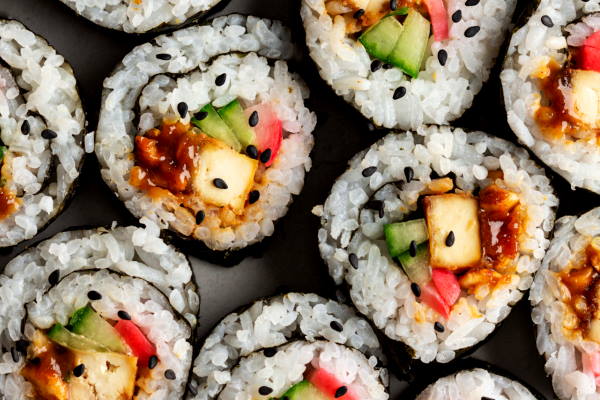
Sushi means vinegared rice, not raw fish. That is the common misunderstanding at the heart of this question. Sashimi is raw fish served without rice, and nigiri and some maki rolls use raw fish on or in the rice. Plenty of sushi contains no raw fish at all: cucumber, avocado, cooked egg, cooked prawn, tofu.
The seaweed wrapper is nori, which is fine for babies in the small amounts sushi uses. Our fish guide covers which cooked fish to choose.
What to order, what to skip
A practical sorting for a toddler at a sushi restaurant:
Fine from 12 months
- Cucumber rolls, known as kappa maki
- Avocado rolls
- Cooked salmon or cooked prawn rolls
- Tamago, the sweet cooked egg topping
- Inari, a pouch of seasoned tofu filled with rice
- California rolls, if made with cooked crab stick rather than raw
Skip until much older
- Any sashimi, which is raw by definition
- Raw salmon, tuna, yellowtail or scallop nigiri
- Raw fish rolls of any kind
- Wasabi, which is far too hot for a small mouth
- Pickled ginger, which is sharp and often sugary
- Soy sauce, which is one of the saltiest condiments there is
When can children eat sushi?
Three separate timelines, which is why one answer never fits:
Cut rolls into small pieces, since a whole piece is round, dense and about the width of a small airway. Watch that the rice is not too sticky in one lump.
Cooked fish, egg and vegetable options widen as they chew better. Keep soy sauce off the plate or heavily diluted.
Many health services suggest waiting until about 5 for raw fish. Some families wait longer. If you do introduce it, use a busy, reputable restaurant with high turnover.
Soy sauce is the hidden problem: a single tablespoon contains roughly 0.9 g of salt, which is close to an entire day's allowance for a baby under one and half of it for a toddler. Ask for it on the side and let your child eat the sushi plain, or dilute a few drops in water if they want the ritual of dipping.
Baby friendly cooked salmon and avocado roll
Making it at home lets you skip the seasoned rice, which removes most of the salt and sugar:
Baby friendly cooked salmon and avocado roll
Makes 2 toddler portions, from 12 monthsIngredients
- 4 tablespoons cooked short grain rice, unseasoned
- 1 small piece of cooked salmon, flaked
- A few slices of ripe avocado
- 1 sheet of nori, optional
Method
- Cook the rice and let it cool to room temperature, without adding the usual vinegar, sugar and salt seasoning.
- Flake the cooked salmon carefully with your fingers, checking every flake for bones.
- Spread the rice on the nori if using, lay the salmon and avocado along one edge, and roll it up firmly.
- Cut into small pieces suited to your child's age, and serve straight away.
Risks and safety
Raw fish is the main one. A young immune system deals badly with listeria, salmonella and parasites such as anisakis, and the resulting illness dehydrates a small child quickly. Freezing to commercial standards kills parasites and is required for sushi grade fish in many countries, but freezing does nothing to bacteria, so sushi grade is not the same as safe for a baby.
Choking is worth a thought too. A whole sushi piece is round and dense, and sticky rice can clump. Cut pieces down and supervise. On allergens, sushi routinely involves fish, shellfish, soy, sesame and egg, so it is a poor setting for a first introduction of any of them. And keep an eye on mercury if raw tuna is on the table later on, since bigeye tuna is on the avoid list in our tuna guide.
Sushi FAQ
Can babies eat sushi?
Cooked and vegetable sushi yes, from around 12 months, cut into small pieces. Raw fish sushi is a different matter and is generally not recommended until about 5 years, because of the risk of parasites, bacteria and listeria that a young immune system handles poorly.
Why can't babies eat raw fish?
A baby's immune system is still developing, so foodborne illness hits harder and dehydrates them faster. Raw fish can carry listeria, salmonella and parasites such as anisakis. Freezing kills parasites and is required for sushi grade fish in many countries, but it does not kill bacteria.
Is the rice in sushi a problem for babies?
Sushi rice is seasoned with vinegar, sugar and salt, so a portion carries more salt and sugar than plain rice. It is not a reason to avoid sushi entirely, but it is a reason to keep portions modest, especially under two when added sugar and salt are both best limited.
What sushi is safe for a toddler?
Cucumber and avocado rolls, cooked salmon or prawn rolls, tamago which is a cooked egg topping, and inari which is a rice filled tofu pouch. Skip anything raw, skip wasabi, and go easy on the soy sauce, which is extremely salty.
Sources
- Sushi, Wikipedia.
- What You Need to Know about Foodborne Illnesses, U.S. Food and Drug Administration.
- Feeding and Nutrition, American Academy of Pediatrics.
This article is general information, not medical advice. Every baby is different. Talk to your doctor, health visitor or paediatrician about your own baby, and about starting solids or any allergy concerns.