Can Babies Eat Vegemite?
A thin scrape, from around 12 months. Vegemite is a national institution in Australia and it is also extremely salty, so the honest answer is about quantity rather than yes or no. Butter the toast first, add the barest smear, and it fits comfortably in a toddler's day. Spread it like an adult and one slice uses most of their salt allowance.
Ask an Australian when a baby can have Vegemite and the answer is usually "as soon as they can hold toast", which is not far off in practice, provided the amount is right. The spread is savoury enough that a smear delivers plenty of flavour, and the vitamins are a genuine plus. Salt is the only thing standing between it and an unqualified yes.
What is Vegemite?
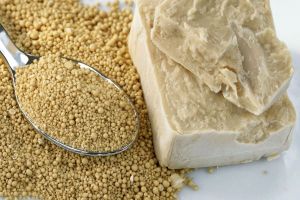
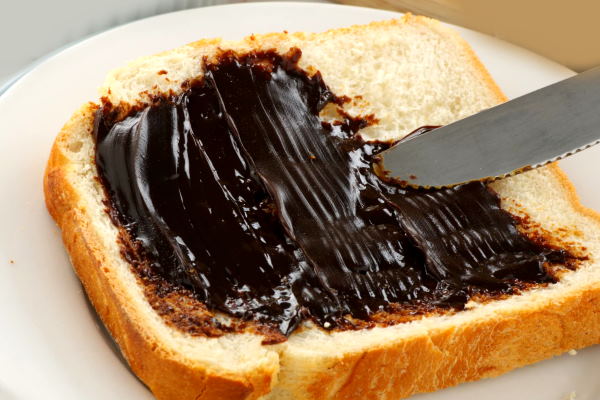
Vegemite is a thick, dark, salty paste made from leftover brewer's yeast extract combined with vegetable and spice additives. It was developed in Melbourne in 1922 and is fortified with B vitamins. It is thicker and more bitter than its British cousin, and Australians are firm on the distinction.
If you are in Britain, Marmite is the equivalent and everything here applies equally. Both belong in the same conversation as our salt guide.
Vegemite nutrition
The salt row is the one that decides portion size. The vitamin rows are why people bother.
| Nutrient | Per 100 g | Per 4 g scrape |
|---|---|---|
| Energy | 195 kcal | 8 kcal |
| Salt | 9.2 g | 0.37 g |
| Protein | 25 g | 1 g |
| Folate | 1000 mcg | 40 mcg |
| Thiamin (B1) | 11 mg | 0.44 mg |
| Riboflavin (B2) | 9 mg | 0.36 mg |
Typical values for Vegemite. A 4 g scrape is roughly a third of a baby's daily salt allowance. Source: USDA FoodData Central.
When can babies have Vegemite?
Salt sets the pace here, nothing else:
Under 1 g of salt a day leaves almost no room. Plenty of Australian families do offer a tiny scrape earlier than 12 months, and one is not going to cause harm, but it is not doing anything useful either.
With the limit at about 2 g of salt a day, a thin smear a few times a week sits comfortably within it. Butter first, which spreads the flavour and stops you using too much.
Butter first, then scrape: spreading butter or a dairy free alternative underneath does two useful things. It stops the Vegemite soaking into the bread, so less is needed, and it takes the edge off the saltiness. Toast cut into finger width strips is easiest for a baby learning to feed themselves.
Why families like it
Beyond tradition, there are decent reasons Vegemite survives on toddler plates:
B vitamins
Thiamin, riboflavin, niacin and folate in useful amounts, and B12 in the versions that include it, which matters for vegan families.
Savoury, not sweet
Most spreads aimed at children are sugary. A savoury option helps balance a palate that gets plenty of sweet already.
Easy finger food
Vegemite toast strips are about as simple as self feeding gets, and they hold together in a small fist.
Risks and safety
Salt is the concern, and it is a cumulative one rather than an acute one. A baby's kidneys clear sodium poorly, and a high salt diet over months strains them and nudges blood pressure upward. Australian and UK guidance both put the under one limit at well under 1 g of salt a day, and the World Health Organization recommends reducing salt intake across the whole population.
Vegemite contains barley and wheat derived ingredients, so it is not gluten free. It is dairy free and suitable for vegetarians. As with any strongly flavoured food, some babies simply hate it, and that is not a reaction, just a review. The American Academy of Pediatrics suggests offering a rejected food again another time rather than concluding it is off the list.
Vegemite FAQ
Can babies eat Vegemite?
In very small amounts, and it is better to wait until around 12 months. Vegemite contains roughly 9 to 10 g of salt per 100 g, and a baby under one should have less than 1 g of salt a day in total. A thin scrape is fine, a proper spread is not.
How do you serve Vegemite to a baby?
Spread butter on toast first, then add a scrape of Vegemite so thin the toast still shows through. Cut the toast into finger sized strips a baby can hold. Most Australian parents describe the right amount as a smear rather than a spread.
Is Vegemite healthy for babies?
It has real nutritional value. Vegemite is rich in B vitamins, including thiamin, riboflavin, niacin, folate and in most versions B12, which makes it useful in vegetarian and vegan diets. The salt content is what keeps portions small, so treat the vitamins as a bonus rather than the point.
What is the difference between Vegemite and Marmite?
Both are yeast extract spreads with similar salt levels and B vitamin fortification. Vegemite is thicker, less sweet and more bitter, while Marmite is runnier and slightly sweeter. For baby feeding purposes they are interchangeable and the same cautions apply.
Sources
- Vegemite, Wikipedia.
- Salt reduction, World Health Organization.
- Feeding and Nutrition, American Academy of Pediatrics.
This article is general information, not medical advice. Every baby is different. Talk to your doctor, health visitor or paediatrician about your own baby, and about starting solids or any allergy concerns.