Can Babies Eat Raisins?
Yes, but never whole. Raisins are fine from around 6 months if you chop them small or soak them soft first. On their own they are small, sticky and a genuine choking risk. Stir them into porridge or baking instead, and keep them to mealtimes to be kind to little teeth.
Raisins seem like the perfect toddler snack, and one day they will be. For a baby, though, that little dried grape is a classic choking hazard, and its stickiness is not kind to new teeth either. None of that means raisins are off-limits. It just means you chop or soak them and use them as an ingredient rather than a handful.
What are raisins?
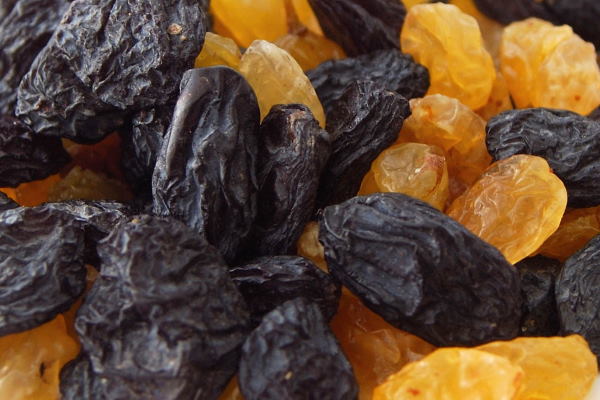
Raisins are dried grapes. Drying removes the water and concentrates everything else, including the natural sugar, which is why they are so sweet and sticky. That same concentration means a little gives useful iron and fibre, but also a lot of sugar in a small, sticky package.
Raisins work best cooked or soaked into something soft. Stir chopped, soaked raisins into oatmeal, or bake them into soft fingers with mashed banana.
Raisin nutrition for babies
Raisins are concentrated, so a little brings iron, fibre and potassium, along with a lot of natural sugar.
| Nutrient | Per 100 g |
|---|---|
| Energy | 299 kcal |
| Carbohydrate | 79 g |
| of which sugars | 59 g |
| Fibre | 3.7 g |
| Iron | 1.9 mg |
Typical values for raisins. They are high in natural sugar, so they are used in small amounts. Source: USDA FoodData Central.
When can babies eat raisins?
Raisins can start from around 6 months, always chopped or soaked, never whole:
Soak raisins until soft, chop them finely, and stir them into porridge, yogurt or a fruit puree.
Bake finely chopped raisins into soft muffins or fingers, where they are spread out and softened.
Keep chopping raisins until your child chews really well, usually past the first birthday. Serve them with meals.
Choking and teeth: whole raisins are a choking hazard for babies and toddlers, so chop or soak them. They are also sticky and sugary, which can cause tooth decay, so keep them to mealtimes and offer water afterwards.
Health benefits of raisins for babies
Some iron
Raisins provide a little iron, which is helpful from 6 months, especially in meat-free diets.
Fibre
They add fibre, which supports digestion, though too many can loosen things up.
Natural sweetness
Their concentrated sweetness can sweeten a bake without any added sugar.
Because they are so sweet, raisins are a good natural sweetener for baking. Chop them into soft oat fingers, or cook them down into a spread with apple.
How to serve raisins safely
Do
- Chop raisins finely or soak them soft.
- Stir them into other foods.
- Serve them at mealtimes.
- Offer water afterwards for teeth.
Avoid
- Whole raisins as a snack.
- Handing over a box to graze on all day.
- Raisins as a frequent between-meal treat.
- Yogurt-coated or sugared raisins.
Risks and safety
Raisins bring two risks: choking, because they are small and sticky, and tooth decay, because they are sugary and cling to teeth. Chop or soak them, keep them to mealtimes, and follow with water, and they become a useful ingredient rather than a worry.
Dried fruit and teeth: the NHS suggests keeping dried fruit like raisins to mealtimes rather than snacks, because the sugar can harm teeth.
Easy raisin recipe (6 months)
Soaked raisin porridge for baby
Makes 2 baby portions, from 6 monthsIngredients
- 1 tbsp raisins
- 3 tbsp rolled oats
- 150 ml milk or water
Method
- Soak the raisins in hot water for 10 minutes until plump, then chop them finely.
- Cook the oats in the milk or water until soft and thick.
- Stir the chopped raisins through the porridge, then cool before serving.
Raisin FAQ
When can babies eat raisins?
Babies can have raisins from around 6 months, but not whole. They are small, sticky and a choking risk, so chop them finely or soak them until plump and soft, and stir them into other food.
Are raisins a choking hazard?
Yes. Whole raisins are the right size to block a small airway, and their stickiness makes them cling. Always chop or soak them for babies and young toddlers rather than serving them whole.
Are raisins bad for a baby's teeth?
Raisins are sticky and sugary, so they can cling to teeth and feed tooth decay. Serve them at mealtimes rather than as a constant snack, and offer water afterwards.
Do raisins have any benefits for babies?
Yes. Raisins provide some iron and fibre, and a little natural sweetness. Used well, chopped into porridge or baking, they are a handy ingredient, just not an all-day snack.
Sources
- Raisin, Wikipedia.
- FoodData Central, U.S. Department of Agriculture.
- Weaning and feeding, National Health Service (UK).
This article is general information, not medical advice. Every baby is different. Talk to your doctor, health visitor or paediatrician about your own baby, and about starting solids or any allergy concerns.