Can Babies Eat Almonds?
Yes, but the form really matters. From around 6 months you can offer almond as smooth almond butter thinned into food, or as fine ground almond in baking. Never whole nuts, and never a thick spoon of nut butter, because both can choke a baby. Introducing almond early can also help lower the chance of a nut allergy.
Almonds are a good example of a food where how you serve it matters far more than whether you serve it. As a whole nut, it is off the table for years. As a smooth, thinned butter, it is a nutritious food you can offer from 6 months, and getting it in early may even help. Here is how to do it safely.
What is an almond?
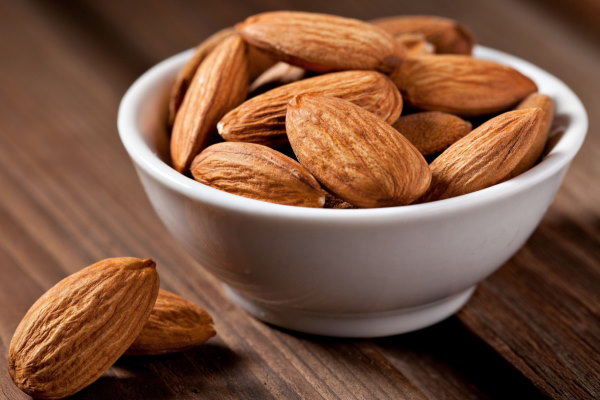
An almond is the edible seed of the almond tree. It is a tree nut, the same family as walnuts and cashews, and it is eaten whole, flaked, ground into flour, or blended into a smooth butter. For babies, the butter and the ground forms are the only ones that are safe.
The safe way to give almond to a baby is to blend it into something soft. Stir a little thinned almond butter into warm oatmeal, or mix it with mashed banana for a smooth, easy meal.
Almond nutrition for babies
Almonds are rich in healthy fats, protein, fibre and vitamin E, plus calcium. Babies only have a small amount at a time, as thinned butter.
| Nutrient | Per 100 g (almonds) |
|---|---|
| Energy | 579 kcal |
| Protein | 21.2 g |
| Fat | 49.9 g |
| Fibre | 12.5 g |
| Calcium | 269 mg |
| Vitamin E | 25.6 mg |
Typical values for almonds. A baby has only a teaspoon or so of thinned almond butter. Source: USDA FoodData Central.
When can babies eat almond?
Almond can start from around 6 months, once your baby is eating other solids. Always as smooth, thinned butter or fine ground almond:
Mix a small amount of smooth almond butter with warm water until runny, then stir it into oatmeal or fruit puree.
Spread a thin layer of smooth almond butter on soft food, or bake with fine ground almond, keeping everything smooth.
Offer a thin layer of smooth almond butter on toast fingers. Keep it thin, and still no whole nuts.
Choking: whole nuts and nut pieces are a serious choking hazard and are not suitable for children under about 5 years. Thick nut butter straight from the jar is also a risk, so always thin it into food.
Health benefits of almond for babies
Healthy fats
Almond butter gives unsaturated fats that pack energy into a small amount of food, useful for growing babies.
Protein and vitamin E
It offers protein for growth and vitamin E, which acts as an antioxidant in the body.
Early is helpful
Introducing common allergens like tree nuts early, and keeping them in the diet, can help lower allergy risk.
Almond is one of several common allergens worth introducing in the first year, alongside peanut and egg. Once your baby has tried it safely, keep offering it now and then to keep it familiar.
How to serve almond safely
Do
- Use smooth almond butter with no added salt or sugar.
- Thin it into food so it is runny, not sticky.
- Introduce it at home, in the morning, with a small amount.
- Keep offering it now and then once tried.
Avoid
- Whole or chopped nuts under about 5 years.
- Thick nut butter straight from the jar.
- Crunchy nut butter with pieces in it.
- Starting away from home the first time.
Risks and safety
Almond carries two separate risks: choking on whole nuts or thick butter, and a tree nut allergy. Handle choking by only ever giving smooth, thinned butter. Handle allergy by introducing it early, watching your baby closely, and getting advice first if your baby is higher risk.
Higher risk babies: babies with severe eczema or an egg allergy have a higher chance of nut allergy. Speak to your doctor before introducing tree nuts, as they may suggest testing or a first taste under supervision. The American Academy of Pediatrics has guidance on introducing common allergens.
Easy almond recipe (6 months)
Almond butter porridge for baby
Makes 1 to 2 baby portions, from 6 monthsIngredients
- 1 tsp smooth almond butter, no added salt or sugar
- 3 tbsp warm oatmeal or fruit puree
Method
- Stir the almond butter into a little warm water until it is thin and runny, with no thick lumps.
- Mix it thoroughly into the warm oatmeal or fruit puree.
- Check it is smooth, let it cool to a safe temperature, then offer a small amount and watch your baby.
Almond FAQ
When can babies eat almonds?
Babies can have almond from around 6 months, but only as smooth almond butter thinned into food, or as fine ground almond in cooking. Never give whole or chopped nuts, which are a serious choking hazard.
Can babies eat whole almonds?
No. Whole nuts and nut pieces are a serious choking hazard and should not be given to children under about 5 years. Use smooth almond butter, thinned into other food, instead.
Are almonds a common allergen?
Yes. Almonds are tree nuts, which are one of the common food allergens. Current advice is to introduce them early rather than delay. If your baby has severe eczema or another food allergy, talk to your doctor first.
How do you give almond to a baby safely?
Stir a small amount of smooth almond butter into warm water until it is runny, then mix it into porridge or fruit puree. You can also bake with fine ground almond. Keep it smooth, and offer it at home so you can watch your baby.
Sources
- Almond, Wikipedia.
- FoodData Central, U.S. Department of Agriculture.
- Starting Solid Foods, American Academy of Pediatrics.
This article is general information, not medical advice. Every baby is different. Talk to your doctor, health visitor or paediatrician about your own baby, and about starting solids or any allergy concerns.